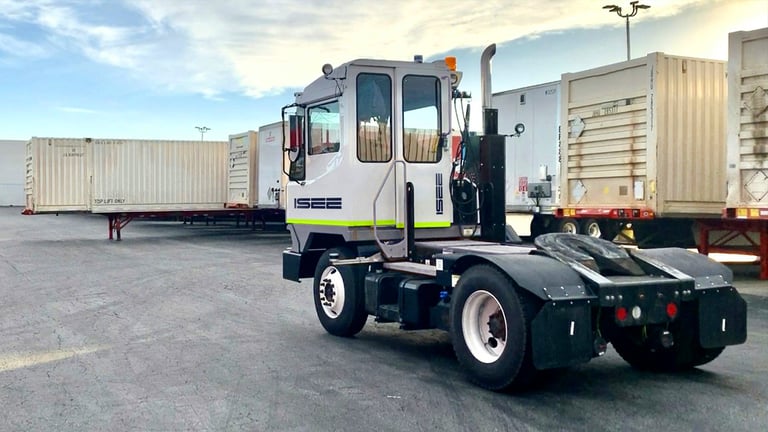
Autonomous Material Movement: The Next Evolution of Industrial Operations
When manufacturers look to improve productivity, the conversation usually centers on production itself: reducing cycle times, increasing throughput, improving quality, or optimizing equipment utilization.
But one of the largest consumers of labor in most facilities happens between those production steps.
Every day, workers spend hours transporting parts, tools, raw materials, work-in-progress, and finished goods between warehouses, production lines, staging areas, and shipping docks. Those movements are essential to keeping operations running, but they consume capacity that could go toward higher-value work.
As labor shortages persist, facilities expand, and production demands increase, industrial organizations are rethinking their most routine workflows—and autonomous material movement is emerging as a practical solution.
The Hidden Cost of Moving Materials
Most organizations treat material transportation as “just part of the job.” As a result, it’s rarely measured and almost never optimized.
This approach obscures a set of real operational costs:
- Skilled employees spending productive hours transporting materials instead of performing production work
- Frequent forklift trips that increase equipment wear and maintenance expense
- Congestion around production areas and warehouse aisles
- Production delays caused by waiting on materials to arrive
- Difficulty scaling operations without adding labor and equipment
Material movement is necessary, but it doesn’t have to remain manual.
Where Autonomous Material Movement Creates Value
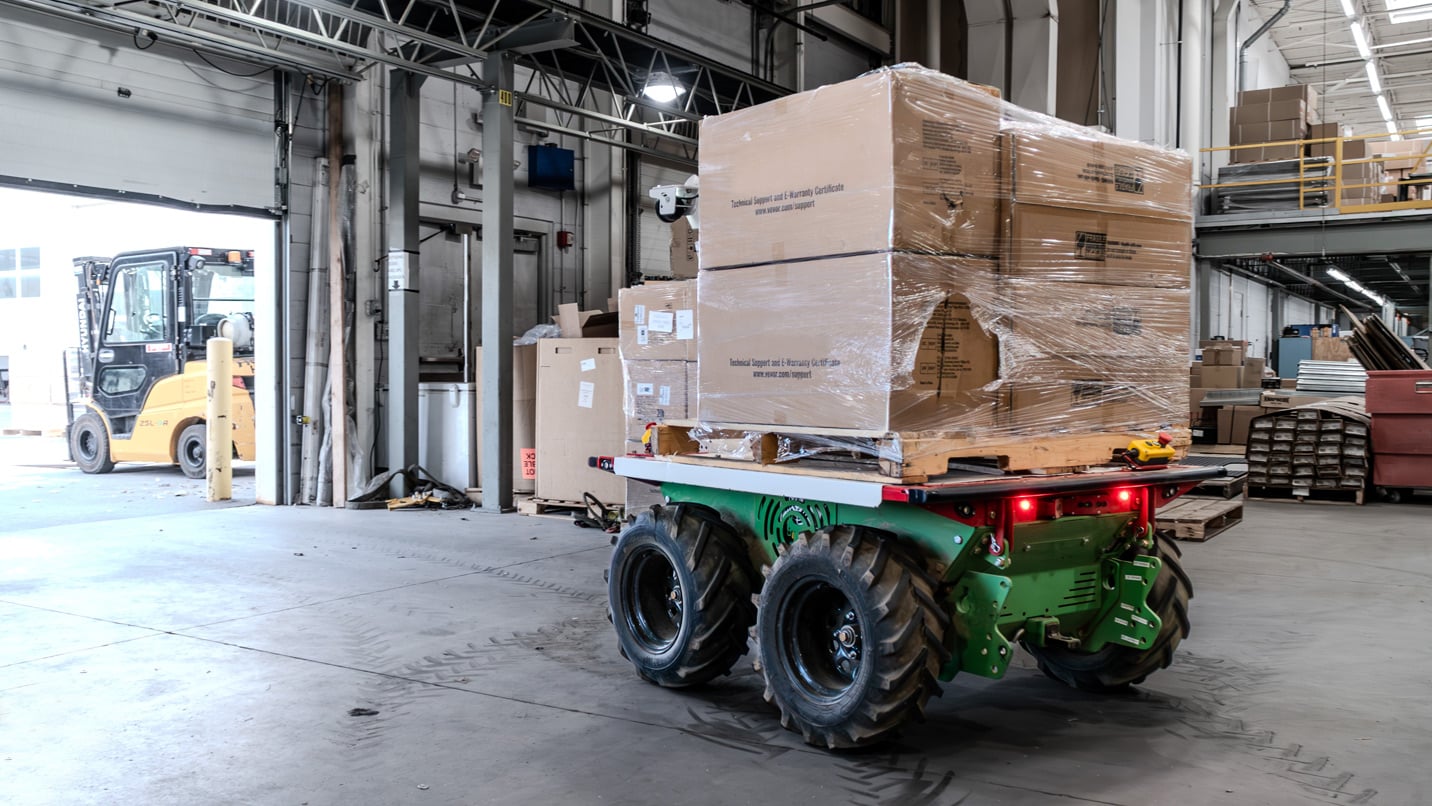
Autonomous material movement offers organizations a way to improve the flow of materials throughout their facilities without fundamentally changing how products are made.
Rather than having employees spend valuable time transporting materials between warehouses, production lines, staging areas, and shipping docks, autonomous systems handle repetitive tasks while integrating into existing workflows.
Organizations exploring autonomous logistics often find value in five key areas.
Better Labor Utilization
Many transportation tasks are repetitive and predictable. By handling routine material movement, autonomous systems allow employees to spend more time on higher-value work that requires skill and expert judgment.
Improved Throughput
Production depends on materials arriving where they’re needed, when they’re needed. Autonomous transportation creates a more predictable flow of materials across a facility, reducing unnecessary delays between operations and keeping production moving.
Reduced Equipment Dependence
Forklifts remain essential. But using them for every routine transportation task drives up wear, maintenance costs, fuel or charging requirements, and operator time. Autonomous robots offer an alternative for repetitive transport, letting organizations reserve forklifts for the work that delivers the most value.
Enhanced Safety
Reducing unnecessary vehicle traffic can help create a more predictable transportation environment and minimize interactions between forklifts, pedestrians, and production equipment.
Scalable Operations
As logistics demands grow, transportation capacity can scale alongside them without relying exclusively on additional labor and equipment.
The Unexpected Benefit: Visibility
Autonomous material movement deployments can produce another outcome that is equally valuable: visibility into how materials move throughout the facility.
Traditional material transportation is difficult to measure. Forklift trips, manual deliveries, transportation delays, and route inefficiencies rarely appear on production dashboards. As a result, organizations often lack a clear understanding of how labor and equipment are being used to support material flow.
Connected autonomous platforms change that.
Organizations gain insight into utilization, route performance, transportation frequency, mission completion, battery health, idle time, and operational bottlenecks. That visibility helps operations leaders better understand how materials move throughout their facilities while identifying future opportunities to improve efficiency and optimize workflows.
Where to Start
The strongest case for autonomous material movement is also the most practical one: it doesn’t require an operational overhaul to prove itself. Most deployments begin with a single route that already runs dozens of times a day.
A few principles tend to separate deployments that stick from those that stall.
1. Start with One High-Impact Workflow
There may be a temptation to automate everything at once. A better approach is to start with a route that is repetitive, predictable, and already consuming meaningful labor hours. A narrow scope makes results easier to measure and easier to scale.
2. Understand the Workflow First
Layout, travel distance, and daily volume materially affect what automation can deliver. A route with heavy repetition and consistent demand behaves very differently from one with sporadic activity.
Understanding how materials actually move — frequency, distance, payload, timing — establishes whether autonomous transport fits before any equipment enters the building. It also determines which form of automation applies.
3. Keep People Where They Add the Most Value
The goal isn’t to remove people from the process. It’s to remove them from repetitive transportation tasks. Activities that require judgment, dexterity, and problem-solving remain with employees while autonomous systems handle routine movement.
4. Structure automation as an operating cost
Capital approval cycles are one of the most common reasons automation projects stall before they begin. Structuring deployment as a fixed monthly operating expense removes the upfront purchase decision and makes the commitment easier to budget, approve, and adjust as conditions change.
5. Scale Based on Results
Initial deployments produce something manual transportation rarely does: a record. Utilization, route performance, and capacity impact become visible from the first weeks of operation. That data can create a clearer foundation for deciding where automation should expand next.
The Future of Material Flow
Industrial operations will continue searching for new ways to improve productivity, increase throughput, and maximize the value of their workforce. As that search continues, organizations are beginning to look beyond individual production processes and examine the workflows that connect them.
The future of automation isn’t simply about deploying smarter robots. It’s about smarter workflows.
Organizations that rethink how materials move throughout their facilities can unlock meaningful improvements in efficiency, scalability, and operational performance without fundamentally changing how products are made. By reducing reliance on repetitive transportation tasks and bringing greater visibility to material flow, they can build operations that are more connected, adaptable, and prepared for future growth.
Talk with a Holman robotics expert about where autonomous material movement may fit in your operation.
Related Resources
Explore more related industry news, insights, and developments.