-
What We DoWith our integrated fleet services, you get the entire fleet management and leasing market from a single source and can purchase, finance, manage and sell your fleet cost-effectively. And you only ever pay for what you actually use.Overview

-
ResourcesWe have a lot to share. Browse our resources library for current insights, data, strategies, and success stories from our own experts in their respective fields.Overview
-
About UsWhen Holman was founded in 1924, we set something positive in motion. Our consistent focus on people and our commitment to integrity make us who we are today.Overview
 Join Our TeamWe’re not just in the automotive business, we’re in the people business. Join us for the ride.Browse Careers

Driver Shortage? Then Switch to Small Transporters!

In many companies, the situation is becoming critical – because the real bottleneck is now often behind the wheel: truck drivers are in short supply. And it’s noticeable. Whether in trades, service industries, or retail – those relying on large commercial vehicles are increasingly struggling with empty driver seats. Delivery deadlines are missed, orders pile up, and costs rise. Sound familiar? Then it’s time to rethink your vehicle strategy.
The Truck Is Idle Because No One Is Behind the Wheel
Currently, around 80,000 to 100,000 truck drivers are missing in Germany – and the trend is rising. Almost a third of drivers are already over 55, and each year, 30,000 to 35,000 retire. Newcomers? Only about 15,000 to 20,000 per year. In short: the situation is serious. If companies don’t take countermeasures, not only will trucks come to a standstill – soon the entire supply chain could too.¹
Time To Rethink: Small Transporters Instead of Trucks
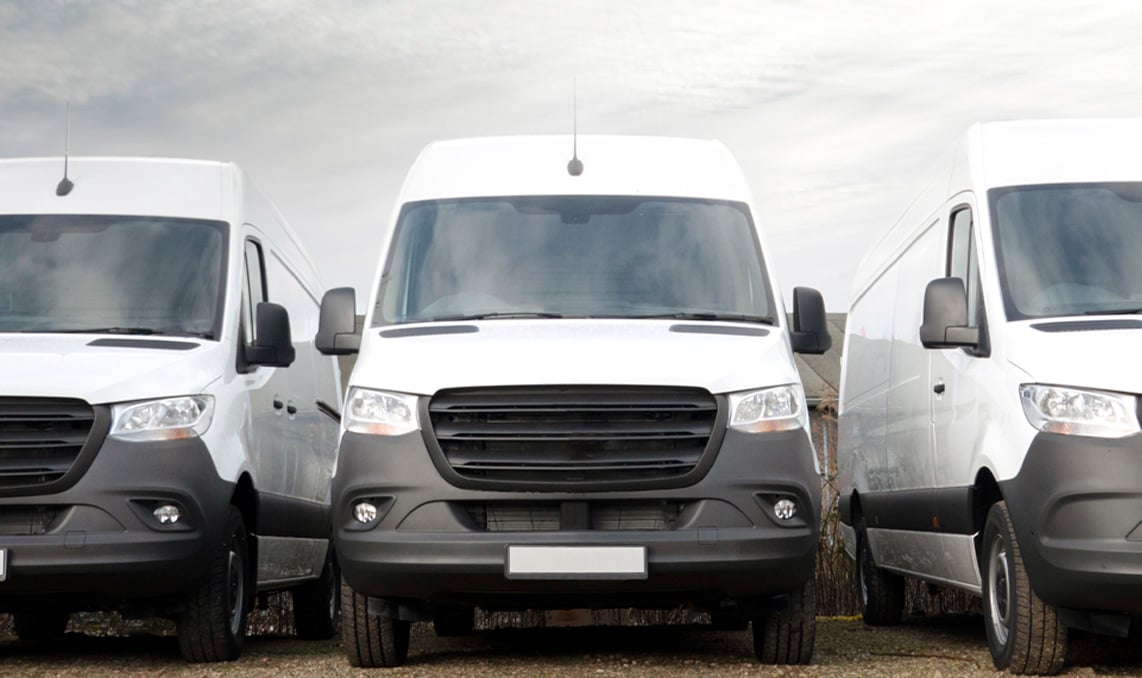
The good news: there are alternatives – and they’re already in the yard. Small transporters up to 3.5 tons are much easier to staff. Why? Simple:
- Anyone with a standard Class B driver’s license can drive them – no expensive truck license, no complex training.²
- In Germany, there are over 22.5 million car driver’s licenses – nearly a million more than the previous year. In other words: the pool of potential drivers is huge. So why keep relying on vehicles that hardly anyone is allowed to drive?³
And Now the Driver’s License Reform Is Coming Too
Starting this year, things get even more interesting. The EU has decided to raise the weight limit for Class B licenses from 3.5 to 4.25 tons – but only for vehicles with alternative or zero-emission drives. The condition: the driver must have held their license for at least two years and completed additional training.⁴
This means: more range, more payload – and still no truck license required. A real opportunity for companies to switch to climate-friendly options without creating staffing issues.
What Are the Benefits of Switching to Small Transporters?
Quite a few. Especially more breathing room in workforce planning. And that’s not all:
- More drivers available: No Class C license required
- More flexible use: Urban traffic, service calls, delivery services
- More cost-efficient: Cheaper to purchase, maintain, and operate
- Future-ready: Prepared for new requirements
Holman Supply Chain: When Fleet Management Shouldn’t Be Left to Chance
If you don’t want to leave your fleet to chance, you need a strong partner. That’s where Holman Supply Chain comes in. Holman doesn’t just think in terms of vehicles, but in terms of entire processes – from procurement and equipment to financing and strategic planning.
Whether it’s traditional vans or switching to an electric fleet: Holman knows the levers to pull so your fleet keeps rolling reliably tomorrow. Tailored to your business, aligned with your goals – and backed by years of fleet management expertise.
Switch Now – Before Everyone Else Does
The driver shortage is real – but not without alternatives. Those who switch to light commercial vehicles today open up entirely new possibilities tomorrow: more drivers, more flexibility, lower costs. The next few years will determine who leads in logistics – and who gets left behind.
With Holman Supply Chain, You Can Future-Proof Your Fleet in Time
German Bundestag. (2022). Professional Drivers – Transport and Mobility.
https://www.bundestag.de/dokumente/textarchiv/2022/kw39-pa-verkehr-berufskraftfahrer-909058
Federal Ministry for Digital and Transport. (n.d.). Driver’s License Classes – Overview.
https://www.bmv.de/SharedDocs/DE/Artikel/StV/Strassenverkehr/fahrerlaubnisklassen-uebersicht.html
Statista. (n.d.). Driver’s Licenses – Statistics and Data.
https://de.statista.com/themen/1351/fuehrerscheine/
Wittich, H., & Baumann, U. (March 25, 2025). Driver’s License Reform: These Are the New EU Driver’s License Rules.
auto motor und sport
https://www.auto-motor-und-sport.de/verkehr/fuehrerschein-novelle-das-sind-die-neuen-eu-fuehrerscheinregeln/
Related Resources
Explore more related industry news, insights, and developments.