-
What We DoWith our integrated fleet services, you get the entire fleet management and leasing market from a single source and can purchase, finance, manage and sell your fleet cost-effectively. And you only ever pay for what you actually use.Overview

-
ResourcesWe have a lot to share. Browse our resources library for current insights, data, strategies, and success stories from our own experts in their respective fields.Overview
-
About UsWhen Holman was founded in 1924, we set something positive in motion. Our consistent focus on people and our commitment to integrity make us who we are today.Overview
 Join Our TeamWe’re not just in the automotive business, we’re in the people business. Join us for the ride.Browse Careers

Euro 7 for Commercial Vehicles: What Fleet Managers Need to Know Now
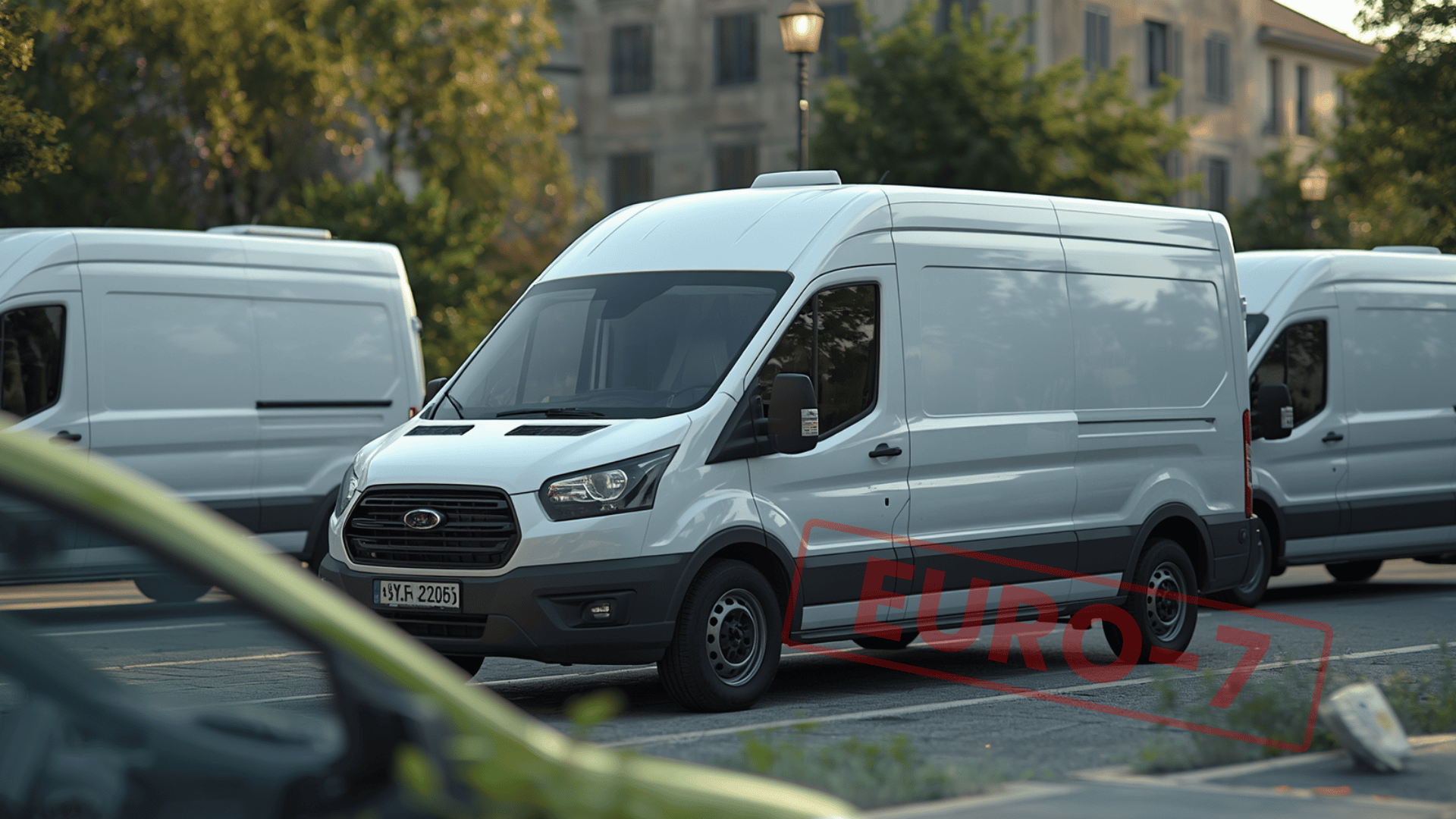
Starting in November 2026, the Euro 7 emissions standard will be introduced in phases for commercial vehicles. The new regulation significantly tightens emissions requirements and introduces a major change: for the first time, it addresses not only tailpipe emissions but also fine particulate matter generated by tire and brake wear.
For companies operating their own fleets, this means reviewing vehicle strategies early and adapting to the new regulatory landscape. What impacts can be expected?
Accelerated Vehicle Procurement
Many fleet operators may bring forward their vehicle purchasing decisions and make targeted investments in Euro 6 vehicles before the new rules take effect.
By contrast, the first generation of Euro 7-compliant vehicles is expected to come with higher acquisition costs and potential technical modifications. As a result, many companies are likely to use the remaining time before the implementation deadline to renew their fleets under favorable conditions.
Rising Total Cost of Ownership (TCO)
The new requirements also apply to tire and brake wear for the first time. To comply with stricter limits, specialized tire compounds and lower-emission brake components are expected to become necessary.
For fleet operators, this could increase costs associated with traditional wear-and-tear parts. As a result, Total Cost of Ownership (TCO) will become even more important and should play a central role in future vehicle procurement and lifecycle management decisions.
Additional Momentum for the Transition to Electric Trucks
The Euro 7 standard increases the technical complexity of diesel-powered commercial vehicles, making their development and production more expensive. This is expected to narrow the price gap between conventional commercial vehicles and battery-electric trucks (BEVs).
For many companies, investing directly in electric mobility may become a more economically attractive option than continuing to invest in increasingly complex internal combustion engine technologies. As a result, the new emissions standard is likely to serve as an additional catalyst for the decarbonization of commercial vehicle fleets.
Conclusion
The introduction of the Euro 7 standard will significantly reshape the fleet management landscape. Early investment decisions, a comprehensive approach to operating costs, and the evaluation of alternative powertrain technologies will become critical success factors moving forward.
Would you like to learn how the new requirements could affect your fleet? We would be happy to advise you on modern fleet and mobility management solutions.
Sources:
Geotab Team. (2026, 12. Mai). Euro 7 emission standard: Business impact and what SMBs must know. Geotab. https://www.geotab.com/ie/blog/euro-7-emission-standard-timeline-eu/
Long, N. (2025, 8. Dezember). Trends bei Lkw: Prognosen für 2026. SNAP. https://snapacc.com/de/nachrichten/prognosen-zu-den-trends-im-lkw-bereich-fur-das-jahr-2026/
Schwarzer, C. M. (2024, 16. Januar). Abgasnorm Euro 7: EU kommt Autoherstellern weit entgegen. heise autos. https://www.heise.de/news/Abgasnorm-Euro-7-EU-kommt-Autoherstellern-weit-entgegen-9598337.html
Related Resources
Explore more related industry news, insights, and developments.