-
What We DoWith our integrated fleet services, you get the entire fleet management and leasing market from a single source and can purchase, finance, manage and sell your fleet cost-effectively. And you only ever pay for what you actually use.Overview

-
ResourcesWe have a lot to share. Browse our resources library for current insights, data, strategies, and success stories from our own experts in their respective fields.Overview
-
About UsWhen Holman was founded in 1924, we set something positive in motion. Our consistent focus on people and our commitment to integrity make us who we are today.Overview
 Join Our TeamWe’re not just in the automotive business, we’re in the people business. Join us for the ride.Browse Careers

EV Incentives for Commercial Fleets – Also Available with Leasing
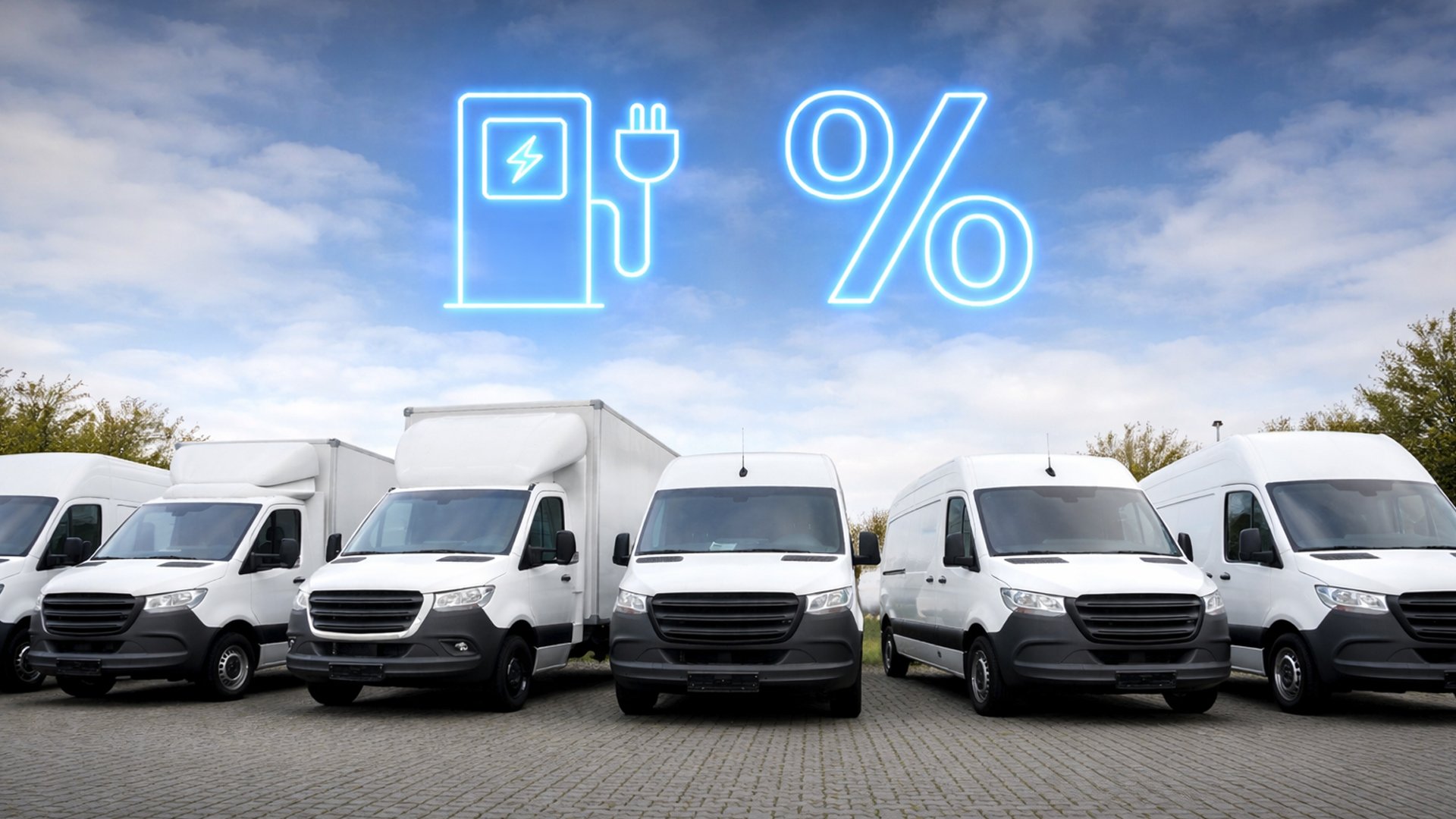
As we mentioned in our previous post, the German federal government has retroactively approved EV incentives starting in 2026. But what does this mean specifically for electric vans and commercial fleets? We have summarized the key points briefly and clearly.
EV Incentives & Leasing – a common misconception
First, we want to clear up a widespread misunderstanding about EV incentives that keeps many fleet managers from benefiting from this “mobility booster.” Recently, the industry criticized that the tax relief only benefits the leasing provider and not the companies using the vehicles, since traditional fleet leasing is excluded from the incentive.
However, there are leasing models where companies can indeed benefit from depreciation and tax advantages. This is exactly where a closer look and good advice are worthwhile.
Starting in 2026, here’s what applies to your electric commercial fleet:
- Special depreciation: For purely electric commercial vehicles (like e-vans) acquired between July 2024 and December 2028, there is a declining special depreciation.
- 75% in the first year
- then 10%, 5%, 5%, 3% and 2%
- depreciation over a total of six years
- Company car taxation: For private use, fully electric company cars with a gross list price of up to 100,000 euros (increased since July 2025) are subject to the 0.25% rule.
- For plug-in hybrids, employees must apply 0.5% of the gross list price per month as the tax basis for private use.
- Vehicle tax exemption: Electric vehicles newly registered until December 31, 2030 continue to be exempt from vehicle tax for up to ten years, but no longer than the end of 2035.
- GHG quota: Company vehicles can also generate additional revenue annually through the GHG quota (greenhouse gas reduction quota) – a nice bonus for the fleet budget.
In short: things are moving again.
The new rules make switching to an electric commercial fleet financially very attractive, also in combination with leasing.
If you want to know which model suits your fleet, feel free to contact us.
ADAC. (2026, 28. Januar). E-Auto-Förderung 2026: Bis zu 6000 Euro Zuschuss. ADAC. https://www.adac.de/rund-ums-fahrzeug/elektromobilitaet/elektroauto/foerderung-elektroautos/
Bundesministerium der Finanzen. (2025, 11. Juli). Der Wachstumsbooster kommt. Bundesministerium der Finanzen. https://www.bundesfinanzministerium.de/Web/DE/Themen/Steuern/Wachstumsbooster/wachstumsbooster.html
Autoflotte.de. (2025, 6. Juni). Elektroautos: Darum kritisiert die DAT die geplante Förderung. Autoflotte. https://www.autoflotte.de/nachrichten/fuhrpark/kein-leasing-privatkunden-aussen-vor-dat-warnt-vor-e-auto-foerder-placebo-3675753
Related Resources
Explore more related industry news, insights, and developments.