-
What We DoWith our integrated fleet services, you get the entire fleet management and leasing market from a single source and can purchase, finance, manage and sell your fleet cost-effectively. And you only ever pay for what you actually use.Overview

-
ResourcesWe have a lot to share. Browse our resources library for current insights, data, strategies, and success stories from our own experts in their respective fields.Overview
-
About UsWhen Holman was founded in 1924, we set something positive in motion. Our consistent focus on people and our commitment to integrity make us who we are today.Overview
 Join Our TeamWe’re not just in the automotive business, we’re in the people business. Join us for the ride.Browse Careers

Finding the right leasing model for your fleet
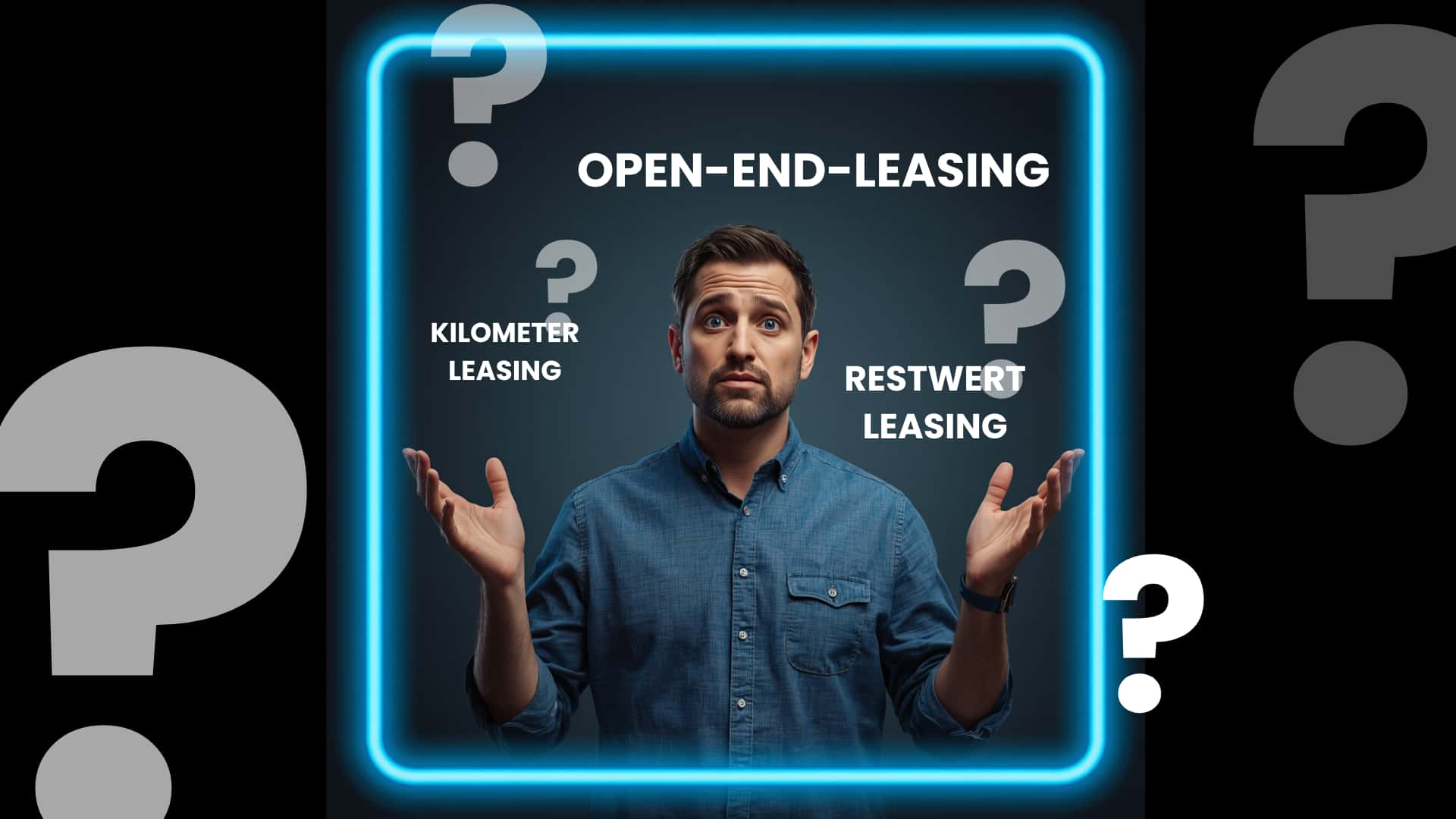
A high-performing fleet is a real success factor for many companies. At the same time, however, it also brings high costs and organizational effort. It is therefore no surprise that fleet leasing is becoming increasingly popular compared to traditional vehicle purchasing.
However, once the decision to lease has been made, the real challenge begins. The wide range of leasing models – from classic mileage-based leasing to flexible open-end alternatives – does not make the choice easy. Those who take a strategic approach can not only optimize costs but also increase the efficiency of the entire fleet.
1. Understand your own needs
At the beginning, an objective analysis of the actual requirements is needed:
- Which vehicles are required?
- How will they be used?
- What is the annual mileage?
- How long should they remain in use?
A fleet is rarely uniform: sales, logistics, and management all have very different requirements. These differences ultimately determine which leasing model is most suitable.
Practical tip: The more clearly the usage is defined, the lower the risk of miscalculations.
2. Define financial objectives
In addition to operational requirements, financial goals also play an important role:
- Preserve liquidity
- Ensure predictable costs
- Optimize balance sheet structure
Leasing offers clear advantages here: no large upfront investments are required, and costs can be planned easily through fixed monthly payments.
Important: The chosen model directly affects both costs and risk.
3. Understand classic leasing models
Depending on the objective, different models may be suitable:
Mileage-based leasing (closed-end leasing)
- Fixed monthly payments
- Fixed term and mileage
- No traditional residual value risk for the lessee
Conclusion: Predictable and simple, but not very flexible. Additional costs may arise, e.g., for excess mileage, damage, or higher wear and tear. Changes during the contract term are often limited and usually expensive.
Residual value leasing (partial amortization leasing)
- Residual value determines the monthly payments
- Residual value risk lies with the lessee
Conclusion: Suitable for companies with market expertise that are willing to take on more risk.
4. Open-end leasing as a flexible alternative
In addition to traditional models, open-end leasing offers significantly more flexibility:
- No rigid terms or mileage limits
- Contracts can be adjusted, extended, or terminated early
- No classic depreciation settlement
- Vehicles can be marketed independently, including sales proceeds
Classification: While traditional models emphasize predictability, open-end leasing focuses more on flexibility and usage (“pay as you use”). This is a major advantage in dynamic environments, where actual usage often cannot be precisely planned.
5. Carefully review contract details
Regardless of the model, the details matter:
- Term and termination options
- Leasing rate and included services
- Mileage regulations
- Return conditions
- Possible additional costs
Since leasing contracts often run for several years, it is worth reviewing them carefully in advance.
6. Manage risks consciously
An important aspect is the distribution of risks:
- Who bears the residual value risk?
- Who covers maintenance costs?
- How flexible is the contract?
Example: In residual value leasing, the risk lies with the lessee, while in mileage-based leasing it usually lies with the provider.
General rule: More security usually means higher costs.
Conclusion: A strategic decision
Choosing the right leasing model is more than an operational issue – it is a strategic lever in fleet management:
- Mileage leasing → maximum predictability
- Residual value leasing → higher risk
- Open-end leasing → maximum flexibility
The key is to align the model consistently with your company’s needs and objectives.
A structured selection process not only ensures cost transparency but also makes the fleet more efficient and future-proof in the long term.
Related Resources
Explore more related industry news, insights, and developments.