-
What We DoWith our integrated fleet services, you get the entire fleet management and leasing market from a single source and can purchase, finance, manage and sell your fleet cost-effectively. And you only ever pay for what you actually use.Overview

-
ResourcesWe have a lot to share. Browse our resources library for current insights, data, strategies, and success stories from our own experts in their respective fields.Overview
-
About UsWhen Holman was founded in 1924, we set something positive in motion. Our consistent focus on people and our commitment to integrity make us who we are today.Overview
 Join Our TeamWe’re not just in the automotive business, we’re in the people business. Join us for the ride.Browse Careers


Fleet Planning 2027: Decisions Fleet Managers Should Make Before the End of the Year
For many companies, planning their fleet for 2027 does not start in January. Budgets are already being coordinated, vehicle requirements reviewed and financing strategies defined. Addressing these decisions early lays the foundation for a cost-effective and future-ready fleet.
Current market data highlights two developments that fleet managers should not ignore: corporate fleets remain highly important, while vehicles are staying in fleets for longer. The challenge therefore is not whether fleets will grow or shrink. The real challenge is to achieve greater cost efficiency from existing fleets while remaining flexible enough to meet future requirements.
Five decisions you should review before the end of the year
1. If you don’t plan today, you’ll be under pressure tomorrow
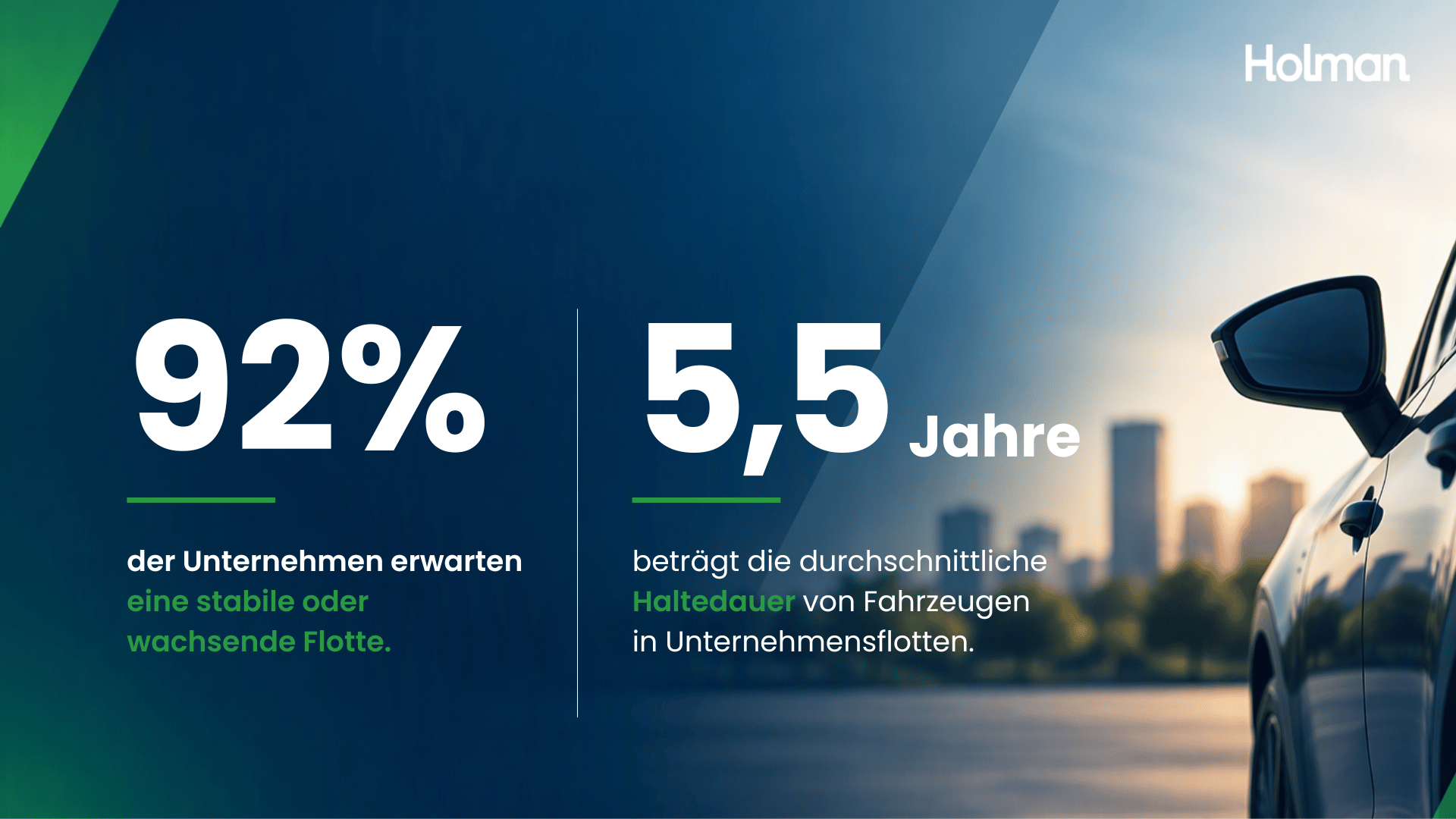
92% of companies expect their fleets to remain stable or grow (cf. Arval Mobility Observatory, 2026). Nevertheless, many companies only start planning their fleets when vehicles need to be replaced or delivery times have already become an issue.
Planning early gives you more room to act. Reacting too late often means having to make compromises.
Ask yourself:
- Which vehicles need to be replaced in 2027?
- What additional vehicle requirements are already becoming apparent?
- Have delivery times and procurement processes been sufficiently taken into account?
- Is your procurement strategy designed to meet future requirements as well?
2. Is your leasing model still part of the solution, or has it become part of the problem?
If companies expect their fleets to remain stable or grow over the long term, choosing the right financing model becomes even more important.
Many leasing and financing models were developed at a time when requirements were more predictable. Today, new mobility concepts, changing mileage and economic uncertainty demand significantly greater flexibility.
Now is therefore a good time to critically review existing leasing and financing structures. The key question is not only what a vehicle costs, but how flexibly your fleet can respond to changing requirements.
3. Why do companies often replace vehicles too early or too late?
The average vehicle holding period has now reached 5.5 years (cf. Arval Mobility Observatory, 2026). Nevertheless, many fleets still rely on rigid replacement cycles. The problem is that neither replacing a vehicle too early nor keeping it too long is automatically cost-effective.
The key question is therefore not: “How old is the vehicle?”
Instead, it should be: “Taking all costs into account, is this vehicle still the most cost-effective option?”
Without answering this question, companies risk unnecessary costs, avoidable downtime or missed opportunities.
4. The leasing rate tells you little about the true cost of your fleet
The increased vehicle holding period of 5.5 years shows that many companies are taking a closer look at the entire vehicle lifecycle. If vehicles are kept in operation for longer, focusing solely on the monthly leasing rate is not enough. The real cost drivers often arise during day-to-day operation.
These include:
- Maintenance and repairs
- Tire costs
- Downtime
- Accident-related costs
- Residual value development
Only by looking at total lifecycle costs can you determine whether keeping a vehicle for longer actually provides economic benefits.
5. Gut feeling is not a fleet strategy
The two developments are directly connected: vehicles are remaining in operation for longer, while companies simultaneously expect stable or growing mobility requirements. For you as a fleet manager, this means greater complexity, more decisions and more responsibility.
If you do not know:
- which vehicles generate the highest costs,
- which vehicles can be cost-effectively kept in operation for longer, or
- how the total costs of individual vehicles are developing,
you will inevitably make decisions based on assumptions rather than facts.
This is why transparency is becoming an increasingly important success factor in fleet management.
Conclusion
Perhaps the most important takeaway for fleet planning in 2027 is this:
More vehicles do not automatically mean higher costs. Longer holding periods do not automatically mean greater cost efficiency. What matters is procuring, managing and replacing the right vehicles at the right time.
Current market data clearly shows that corporate fleets continue to play a central role, while vehicles are being kept in operation for longer than they were just a few years ago. For fleet managers, now is the right time to review procurement strategies, leasing models and lifecycle costs.
Would you like to find out where the greatest potential lies within your fleet? We would be happy to support you in analyzing your existing structures and developing a cost-effective strategy for vehicle procurement, fleet leasing and fleet management together.
Sources:
Arval. (2026, 24. März). Arval Mobility Observatory 2026 – Fuhrpark- und Mobilitätsbarometer. Arval Deutschland. https://www.arval.de/ueber-arval/amo-fuhrpark-und-mobilitaetsbarometer-2026
Nächster Beitrag
What savings potential do warmer winters offer?Verwandte Ressourcen
Weitere Nachrichten, Einblicke und Entwicklungen aus der Branche.