-
What We DoWith our integrated fleet services, you get the entire fleet management and leasing market from a single source and can purchase, finance, manage and sell your fleet cost-effectively. And you only ever pay for what you actually use.Overview

-
ResourcesWe have a lot to share. Browse our resources library for current insights, data, strategies, and success stories from our own experts in their respective fields.Overview
-
About UsWhen Holman was founded in 1924, we set something positive in motion. Our consistent focus on people and our commitment to integrity make us who we are today.Overview
 Join Our TeamWe’re not just in the automotive business, we’re in the people business. Join us for the ride.Browse Careers

How Digitalization Is Keeping the Fleet Industry Moving

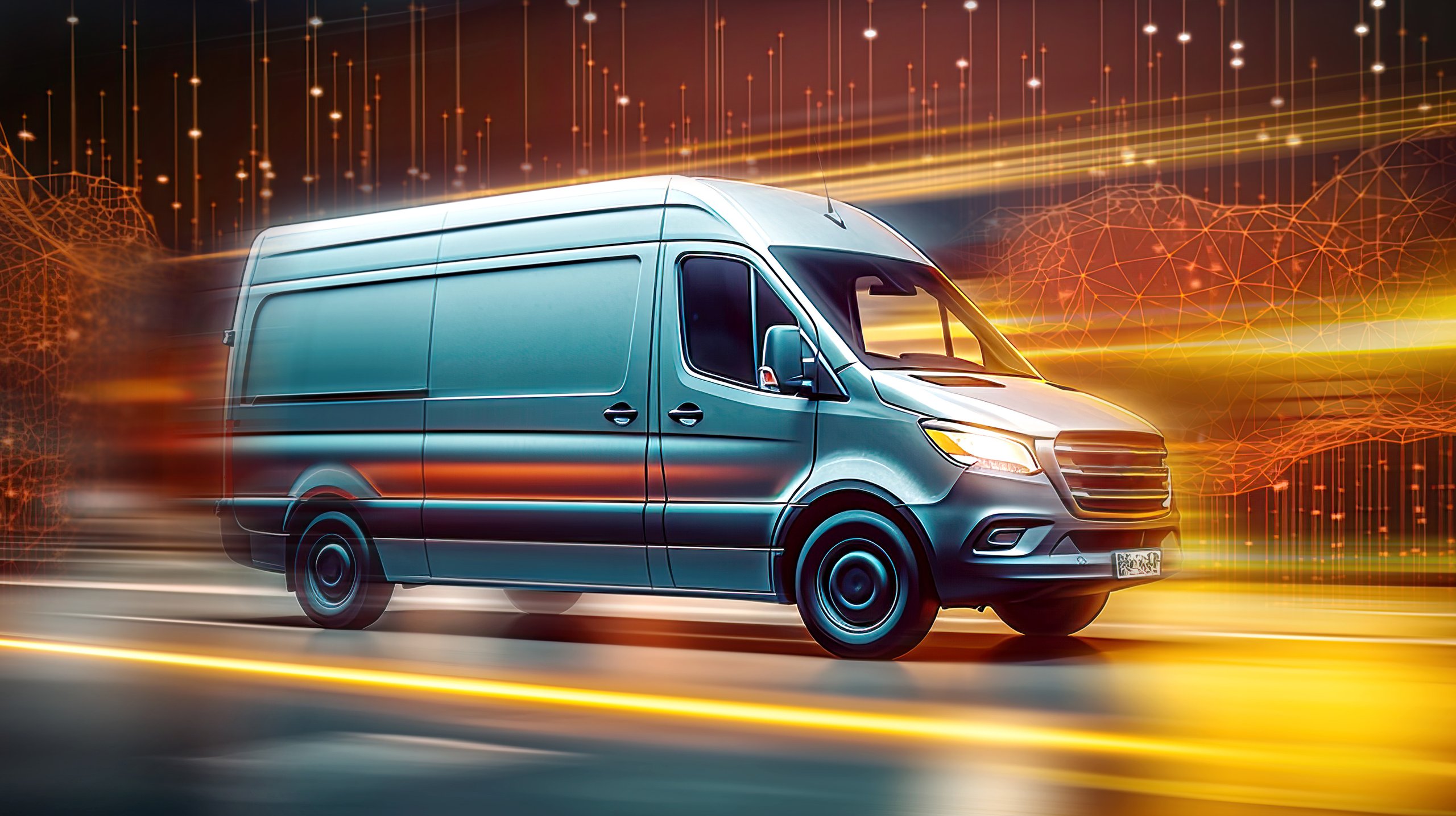
Digitalization is currently shaking up the deck in the fleet industry. From smart connected vehicles to artificial intelligence (AI) to new data protection requirements – there is a lot to consider, but also a lot to gain. Let’s take a closer look at how technological and sustainable trends can change your everyday work as a fleet manager, what the latest studies show and why the importance of AI continues to grow.
Efficiency Through Connectivity – When Vehicles Talk to Each Other
Imagine a world where vehicles communicate not only with each other, but also with their surroundings. Sounds like science fiction? But it’s long been a reality. According to BearingPoint’s German Mobility Outlook 2024 study, connectivity brings huge efficiencies to fleet management. Connected fleets enable you as a company to better plan capacity, perform maintenance predictively, and manage more sustainably overall. The benefits? Less unplanned downtime and less fuel consumption – in short: more efficiency with less resources.
Road Safety Through Smart Data
Artificial intelligence can do more than just generate pretty filters for selfies – it makes fleet management smarter and safer. Intelligent telematics systems analyze driving behavior, plan the best routes and provide real-time data. The result: fewer accidents, optimized routes and lower costs. As a fleet manager, you can save money while increasing the safety of your drivers and vehicles. And by the way, AI can also reduce CO₂ emissions – a plus for the environment!
Data Protection – Safety Belt for Data
Where there is a lot of networking, there is also a lot of data. And they want to be protected. Data protection is a must, especially in the fleet sector, where sensitive personal information is processed. The more data, interfaces and complex systems are used, the greater the risk of security gaps becomes. For you as a fleet manager, this means finding a balance between modern technology and strict data protection guidelines. Not an easy task, but one that is essential for trust in networked systems. In the digital world of new fleets, data security is essentially the safety belt that must be tight.
Conclusion – Between Progress and Responsibility
Digitalization brings both opportunities and challenges for the fleet industry. Networking and AI are opening up new opportunities for greater efficiency and sustainability, while data protection is becoming more of a focus than ever. The path is clear: With safe and responsible use of new technologies, the future of fleet management has a digital star. The only question that remains is: are we ready to use the potential? The answer should be a resounding yes.
Holman will be happy to guide you on your journey to more digitalization and help you get the most out of your fleet. If you have any questions about telematics, data intelligence or other digital solutions, feel free to contact us – together we will find the right solution for your fleet.
Sources:
Citizen, Timo. “Fleet management: These are the most pressing challenges” Auto Flotte, November 4, 2024, https://www.autoflotte.de/nachrichten/fuhrpark/fuhrparkmanagement-das-sind-die-herausforderungen-3571545.
“With AI for more efficiency and safety: How intelligent telematics is revolutionizing fleet management” Fleet, November 11, 2024, https://flotte.de/artikel/129/24518/mit-ki-zu-mehr-effizienz-und-sicherheit-wie-intelligente-telematik-das-flottenmanagement-revolutioniert.
BearingPoint. “German Mobility Outlook 1014” BearingPoint, https://www.bearingpoint.com/de-de/publikationen-and-events/publikationen/fleet-market-outlook/.
Next Post
Many Advantages on One CardRelated Resources
Explore more related industry news, insights, and developments.