-
What We DoWith our integrated fleet services, you get the entire fleet management and leasing market from a single source and can purchase, finance, manage and sell your fleet cost-effectively. And you only ever pay for what you actually use.Overview

-
ResourcesWe have a lot to share. Browse our resources library for current insights, data, strategies, and success stories from our own experts in their respective fields.Overview
-
About UsWhen Holman was founded in 1924, we set something positive in motion. Our consistent focus on people and our commitment to integrity make us who we are today.Overview
 Join Our TeamWe’re not just in the automotive business, we’re in the people business. Join us for the ride.Browse Careers

Leasing Return: Clarity Instead of Obstacle Course

Returning a leased vehicle is often like an obstacle course – with invisible hurdles that only become noticeable when you stumble over them. The smallest scratches, minimal dents and even tiny signs of wear and tear can become a financial stumbling block. But how can such unpleasant surprises be avoided?
The Search for the Needle in the Haystack
The vehicle assessment when returned is often like an inspection under a microscope. Appraisers inspect every detail and sometimes discover damage that you would probably never have noticed. With special tools, mirrors and light reflections, even the smallest signs of wear are made visible – and suddenly a supposedly harmless scratch turns into a hefty bill. Depending on the damage catalog, it is then assessed whether the damage represents a reduction in value. However, there are no uniform standards here – different service providers and associations use different criteria, which leads to endless discussions. People often then ask themselves whether the vehicle was even allowed to be used or whether it would have been better left in the showroom as a museum piece.
The question of what is considered normal wear and tear has been a topic of debate in the industry for years. As a recent ZDF report shows, there is widespread agreement on minor signs of wear and tear: superficial scratches that can be polished out or a slightly worn seat are considered normal wear and tear. The situation is different for deeper scratches, severe dents or damage that requires painting. In between there is a wide gray area in which lessees and lessors often clash.
In recent years, repair and material costs have risen significantly. However, this increase in costs is not proportionate to the sometimes-massive increase in depreciation settlements at the end of the leasing contract. We at Holman have taken a closer look at the development of depreciation over the past four years.
We have analyzed 1,000 vehicles from various fleets and their reduced value settlements every year to obtain a detailed picture. A clear trend is visible: Since 2020, the reduced values calculated by the leasing company have increased by around 31.09% – a considerable increase. Initial results for 2024 show that the reduced values settled are likely to be at a similar level to the previous year. There does not seem to be any relief in sight.
But that’s not all: if you compare the reduced value charged with the actual loss during remarketing, a clear picture emerges.
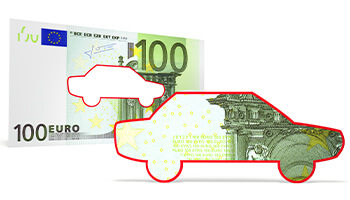
In 2020, the actual loss in value of the vehicles was on average €480.93, while the leasing companies charged an average loss in value of €1,875.35. In 2023, the calculated loss in value rose to €2,458.18, although the actual loss on remarketing was only €970.03.
These figures indicate that lessors are benefiting significantly from the development of reduced values. This finding could further fuel the debate on the calculation of reduced values and trigger more intensive discussions within the industry.
But the crucial question remains: Do lessees really have to accept this situation as “without alternative”?
A new route: open-end leasing
The whole thing is reminiscent of a marathon with unclear rules. The start is known, but the finish and the obstacles are not. So why not choose a system that is clearly defined from the start? What alternatives do fleet operators have to avoid depending on the aforementioned depreciation reports and damage payments?
A clever alternative is so-called open-end leasing, such as our Holman FlexLease. This eliminates the stress of an appraiser. Instead of discussions about theoretical depreciation, the market value of the vehicle is what counts. We take care of the sale – the full proceeds go to you. Transparent, fair and with no hidden costs.
Conclusion: Clear route instead of obstacle course
Returning a leased vehicle doesn’t have to be an obstacle course. With models like open-end leasing, you are in control, save time and money – and avoid the grueling dispute over scratches and the like. Of course, everyone in the economy can set their own premiums – but we believe that you as a customer should not simply pay for theoretical, subjectively assessed reduced values. By selling, you will find out exactly to what extent damage reduces the value.
With us, lessees and lessors do not argue about damage claims and reduced values. On the contrary: We work together to find a holistic solution for your fleet. Never off the shelf – always tailored to your requirements.
If you are ready to shorten your leasing marathon, we are happy to help you. No hurdles, no obstacle course – just clear, fair solutions.
We are happy to advise you on an open leasing model.
Related Resources
Explore more related industry news, insights, and developments.