-
What We DoWith our integrated fleet services, you get the entire fleet management and leasing market from a single source and can purchase, finance, manage and sell your fleet cost-effectively. And you only ever pay for what you actually use.Overview

-
ResourcesWe have a lot to share. Browse our resources library for current insights, data, strategies, and success stories from our own experts in their respective fields.Overview
-
About UsWhen Holman was founded in 1924, we set something positive in motion. Our consistent focus on people and our commitment to integrity make us who we are today.Overview
 Join Our TeamWe’re not just in the automotive business, we’re in the people business. Join us for the ride.Browse Careers

On the Way to the Moon – What Artemis II Teaches Us About Planning and Partnership
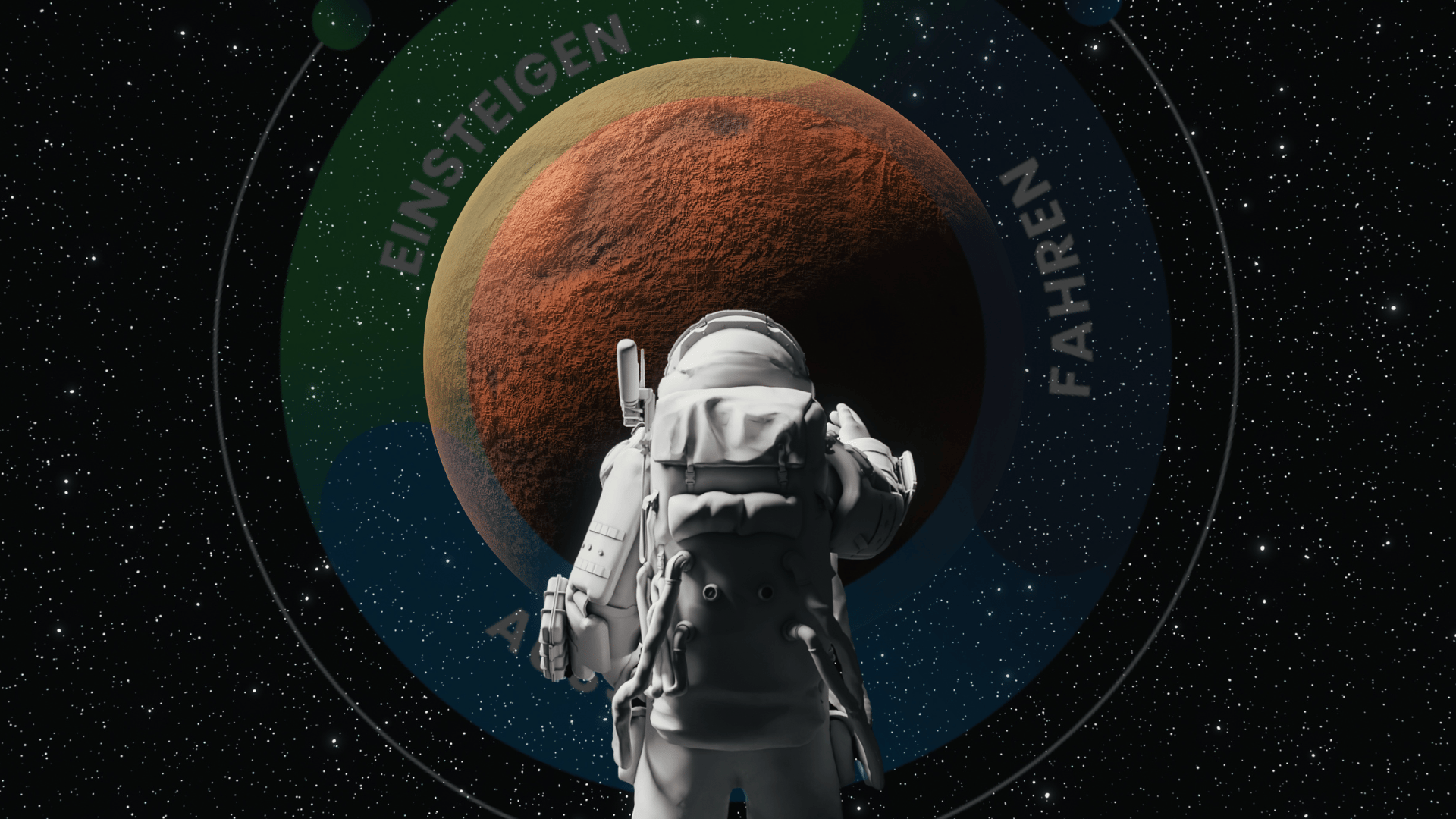
In April 2026, humanity was truly back on its way to the Moon. With Artemis II, NASA sent astronauts on a crewed mission toward the Moon for the first time in more than 50 years.
There was no landing, but it was a decisive step: systems, processes, collaboration, and risk management were tested under real conditions. This is precisely why NASA referred to Artemis II as a preparatory mission for everything that would follow.
Notably, this launch did not happen quietly or without challenges.
Delays as Part of the Plan – Not a Failure
Originally, the launch was scheduled for February and March 2026. However, technical inspections and safety‑critical adjustments led to several postponements. Only after renewed testing did Artemis II receive final approval.
NASA’s principle was clear: launch only when systems and procedures are proven to be robust – even under public pressure.
This is a pattern well known in companies: Not every delay is a setback. Often, it is an essential part of responsible risk management.
Artemis II: Preparation, Not Prestige
Artemis II was deliberately not a landing mission, but a controlled flight with clearly defined objectives:
- Testing systems under real operating conditions
- Securing coordination between crew, technology, and ground teams
- Identifying risks before missions escalate in complexity
Four astronauts orbited the Moon and returned safely to Earth – paving the way for future missions with significantly higher complexity and risk.
An approach that sounds surprisingly familiar in fleet management.
Fleet Management in 2026: Also in a Test Flight Phase
Electrification, CO₂ regulations, volatile energy and vehicle costs, and changing usage profiles put many organizations in a similar position in 2026. Here too, the focus is not on the final state, but on learning systems.
Typical “test flights” in fleet management include:
- New drivetrain technologies
- Adjusted vehicle lifecycle strategies
- Alternative mobility models
The lesson from spaceflight translates remarkably well: Do not land immediately – first, understand.
Flexible leasing models and technology‑agnostic strategies are the operational equivalent of orbiting the Moon: controlled, data‑driven, and adjustable at any time.
Partnership as a Mission‑Critical Factor
Artemis II was not a national solo effort. European and Canadian technology – such as the European Service Module – were essential components of the mission.
The project exemplifies a key insight: complex endeavors only succeed through collaboration.
The same shift has occurred in fleet management: Vehicles are no longer standalone investments, but elements of an integrated system that must be actively managed and protected against risk.
Conclusion: Successful Missions Return Safely
Artemis II demonstrated impressively that major goals are achieved through preparation, testing, and resilient partnerships – including the willingness to delay launches when necessary.
In fleet management, the same rule applies in 2026 as it does in space: Anyone who wants to land safely must first fly cleanly.
Sources:
Deutsches Zentrum für Luft‑ und Raumfahrt (DLR). (2026). Artemis II startet zum Mond – mit deutscher und europäischer Technologie an Bord. https://www.dlr.de/de/aktuelles/nachrichten/2026/artemis-ii-startet-zum-mond-mit-deutscher-und-europaeischer-technologie-an-bord
Editorialge. (2026). NASA Artemis II: Historische Mondmission im Februar 2026. https://de.editorialge.com/nasa-artemis-ii-mission-feburar-2026/
Related Resources
Explore more related industry news, insights, and developments.