-
What We DoWith our integrated fleet services, you get the entire fleet management and leasing market from a single source and can purchase, finance, manage and sell your fleet cost-effectively. And you only ever pay for what you actually use.Overview

-
ResourcesWe have a lot to share. Browse our resources library for current insights, data, strategies, and success stories from our own experts in their respective fields.Overview
-
About UsWhen Holman was founded in 1924, we set something positive in motion. Our consistent focus on people and our commitment to integrity make us who we are today.Overview
 Join Our TeamWe’re not just in the automotive business, we’re in the people business. Join us for the ride.Browse Careers

Open Lease + Commercial Vehicles = Perfect Match
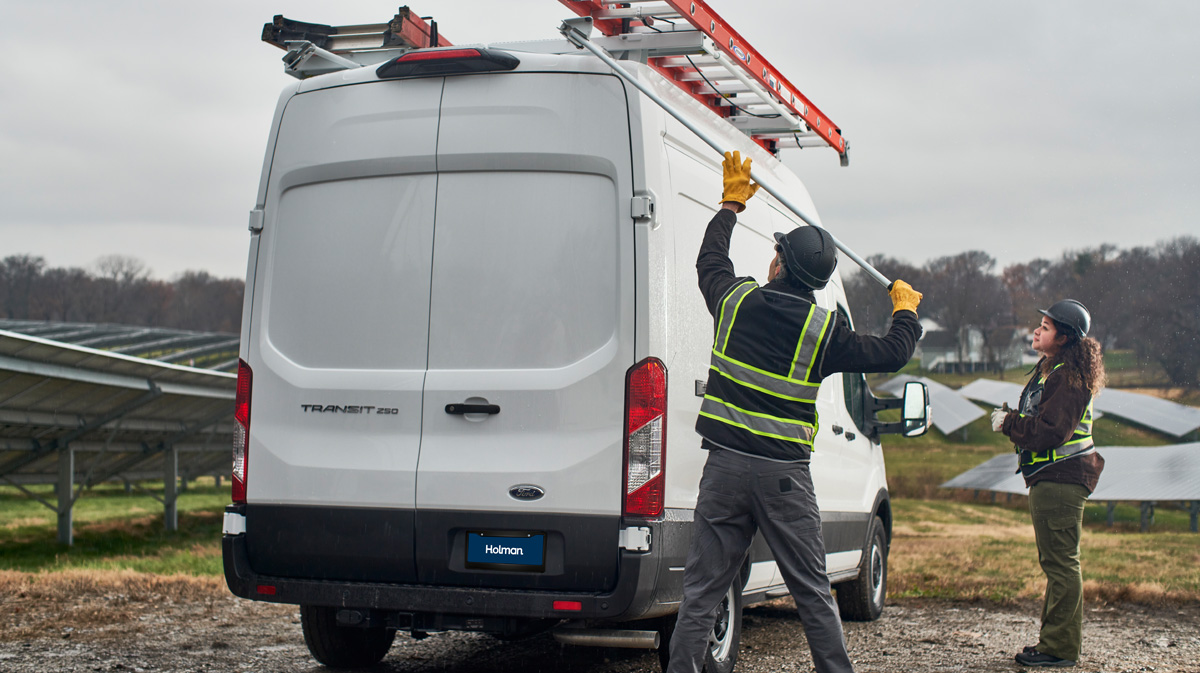
In many areas of life, we face multiple ways to find a solution to a problem. Determining which is the best way in each situation is often difficult. Likewise, when you apply this theory to finding the right financing for your fleet vehicles, you will face a variety of options. You are able to choose from many service providers, many products, and many similar solutions. The selection is large, the decision is difficult –cost pressures, sustainability targets, process optimizations, efficiency and speed play a large role.
Finesse is required when choosing financing of your commercial vehicles. Why? Here’s what our Holman leasing expert Sebastian Fruth had to say about the matter.
Why consider leasing commercial vehicles instead of buying them?
The advantages of leasing commercial vehicles over buying them depend on the individual situation. More specfically, the question you should ask is, “Does this financing solution fit the way we run our work vehicles?
Leasing offers the great advantage in that it protects company liquidity. Since the financing is matched to vehicle depreciation, the depreciation can be optimally adjusted. Compared to the purchase, more capital remains in the company, which can be used for other investments.
However, not all leasing is the same. What should companies look for when choosing the right leasing variant for commercial vehicles?
Here it is crucial to match the right financing form with how the vehicle is used. What does my company need the vehicles for in daily business, how are they used and how does the market impact my fleet? It can be derived from this how predictable the use of the vehicles is.
If the duration of use and mileage of a vehicle are difficult to predict, for example, no funding with fixed terms and mileage should be chosen. Flexibility is the key word here. To do this, we offer our Holman FlexLease model to customers – no rigid mileage limit and flexible contract terms. Companies should ensure that the leasing model optimally supports the needs of the company and thus the use of the vehicles.
Why is it difficult for many companies to make the right decision about how to fund their fleet?
A large part of the challenge is that many customers are not sufficiently informed about the different forms of financing. But companies often also adopt the tried-and-true model, which is not always the optimal solution. Particularly in commercial vehicles, it is often not considered that the financing should be adapted to the specific usage requirements of the vehicle. The One Size fits all approach is out of place here. There is a clear lack of tailor-made solutions that meet the individual needs of the companies.
What challenges are commercial vehicle fleet managers struggling with and what are the solutions?
One of the biggest challenges is the consequences of not customizing financing. Commercial vehicles such as vans are used more intensively and therefore have higher value losses than cars but are often treated with the same financing models. In addition, the availability of vehicles is a major issue, whether in the case of new orders, reparirs or damage events. Here, flexible leasing models provide solutions by enabling adaptations to the actual use and availability of the vehicles.
What does this mean for fleet owners of commercial fleets? As our expert Fruth emphasizes in the interview, it is essential to be sure of the needs of the fleet. What are my goals as a Fleet Owner? What are the business objectives? Which funding model is most appropriate for my company and which has cost savings, efficiency and flexibility that may be needed every day? All these questions must be answered to then work together with a strong partner that is a commercial vehicle expert and can develop the individually suitable solution. Flexible leasing models offer many advantages in any case. If you’re interested and want to find out whether the same flexible model fits your fleet, feel free to contact us here.
Related Resources
Explore more related industry news, insights, and developments.