-
What We DoWith our integrated fleet services, you get the entire fleet management and leasing market from a single source and can purchase, finance, manage and sell your fleet cost-effectively. And you only ever pay for what you actually use.Overview

-
ResourcesWe have a lot to share. Browse our resources library for current insights, data, strategies, and success stories from our own experts in their respective fields.Overview
-
About UsWhen Holman was founded in 1924, we set something positive in motion. Our consistent focus on people and our commitment to integrity make us who we are today.Overview
 Join Our TeamWe’re not just in the automotive business, we’re in the people business. Join us for the ride.Browse Careers

Telematics & Procurement: An Upgrade for Trades Fleets

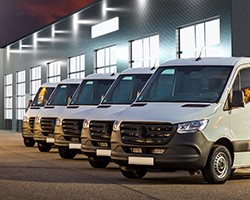
The trade magazine Autoflotte has published a worthwhile fleet profile on the digital optimization of trades and service fleets.
It’s relatively rare for the focus of digitalization efforts to be on smaller commercial fleets—large companies usually take center stage. And with good reason: Germany’s trades sector has barely tapped into the digital potential so far. Autoflotte cites a survey of more than 3,000 van drivers and fleet managers in Europe and the United States. The result: Only about one-third know how to make efficient use of the vehicle data made available to them; among small businesses, it’s as low as ten percent.
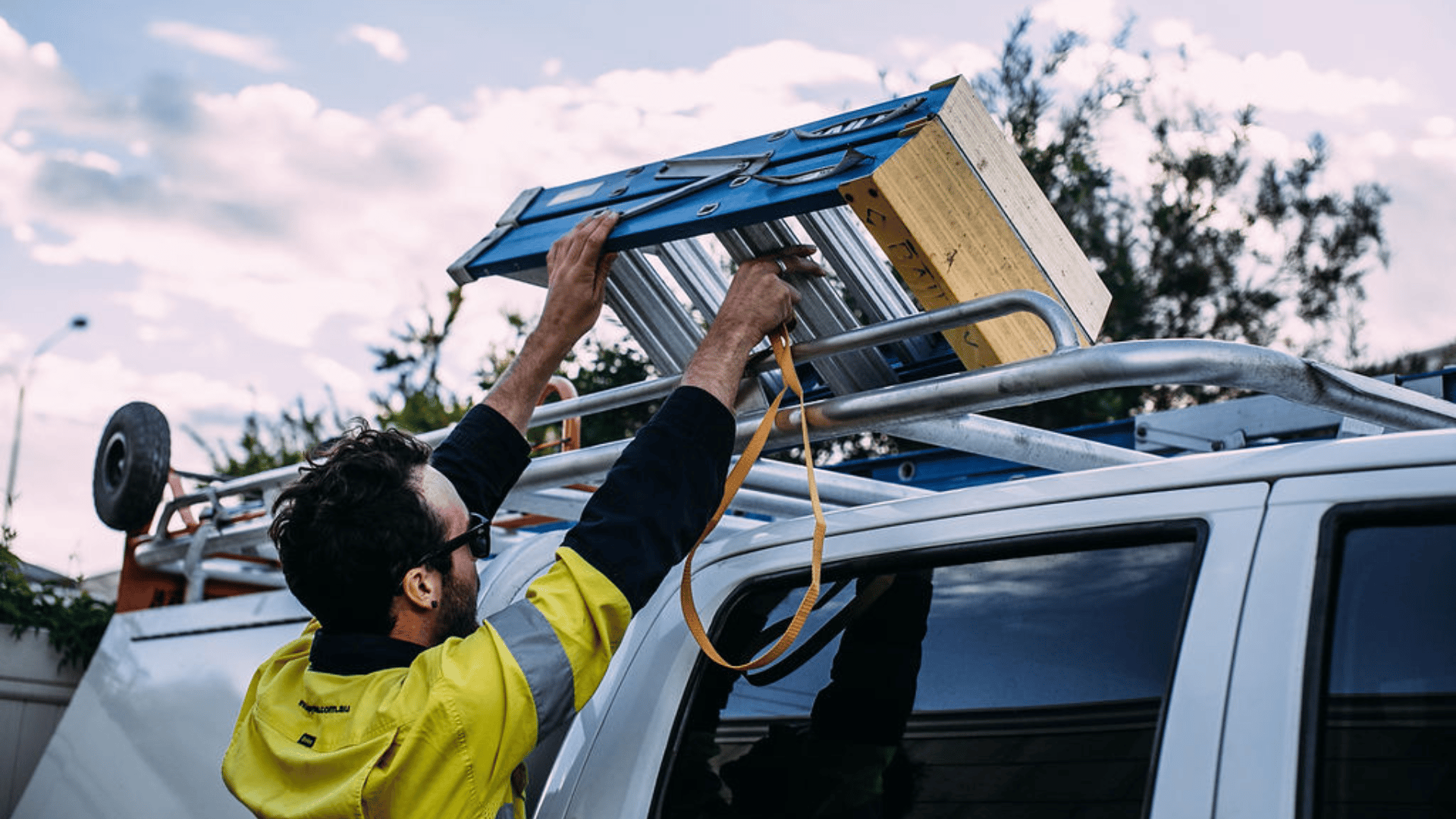
Those are sobering numbers. But what exactly are those ten percent doing? What does a benchmark in the trades sector look like? The profile of Walbrück, a heating and plumbing company based in Bonn, was particularly interesting to us as specialists in commercial fleets. How does this 100-year-old family business with roughly 20 service vehicles leverage the potential of connected vehicles? Christian Domke is happy to explain. Like in many trades companies, the digital fleet manager isn’t an IT expert—he’s a master craftsman and department head. He simply took over fleet management as an additional responsibility in 2022 and has been collecting data on “his” fleet with enthusiasm ever since.
He can monitor this data on the XXL screen in his office, but in practice his smartphone is enough for analysis. Relevant data for him includes fuel level, mileage, error messages, and maintenance alerts. “But the most important tool for me is the live map, so I can see who’s on the road and where,” he says. If an employee suddenly needs to respond to an emergency call, the map quickly shows which technician is closest. A real advantage in day-to-day operations.
There’s still a long way to go before things run as smoothly everywhere as they do at Walbrück. Employees need to be convinced, strategies must be developed, and the right vehicles and equipment have to be procured: telematics boxes, OBD dongles, mobile trackers, accelerometers, fuel cards, tachograph integration, and, if needed, temperature sensors for refrigerated or freezer vehicles. Once the data is available, it naturally impacts procurement as well: Which vehicles with similar specs might be more efficient than the existing fleet? What should the ideal equipment package look like? All of this requires skilled supply chain management.
These supply chain requirements apply beyond telematics, too. The key question remains: How do I get the right vehicle, at the right time, with the right equipment, and at the right price? Anyone working in fleet management knows that these questions can be difficult to answer. On the other hand: thoughtful planning pays off. You save time and money. And with the right strategy, you can gain crucial competitive advantages.
You don’t have to start the process alone: If you want to increase your fleet’s efficiency, our Holman Supply Chain team can support you. Our platform connects vehicle ordering, upfitting, graphics, logistics, and delivery into a single solution—ensuring that everything from telematics to equipment installations fits together seamlessly. Including for trades fleets like the one managed by Christian Domke.
Source:
Hommen, M. (2025, 25. November). Flottenmanagement im Handwerk: Wie Vernetzung hilft und spart. Autoflotte. https://www.autoflotte.de/fuhrparkwissen/fuhrparkportraits/flottenmanagement-im-handwerk-wie-vernetzung-hilft-und-spart-3739042 autoflotte.de
Related Resources
Explore more related industry news, insights, and developments.