-
What We DoWith our integrated fleet services, you get the entire fleet management and leasing market from a single source and can purchase, finance, manage and sell your fleet cost-effectively. And you only ever pay for what you actually use.Overview

-
ResourcesWe have a lot to share. Browse our resources library for current insights, data, strategies, and success stories from our own experts in their respective fields.Overview
-
About UsWhen Holman was founded in 1924, we set something positive in motion. Our consistent focus on people and our commitment to integrity make us who we are today.Overview
 Join Our TeamWe’re not just in the automotive business, we’re in the people business. Join us for the ride.Browse Careers


What savings potential do warmer winters offer?
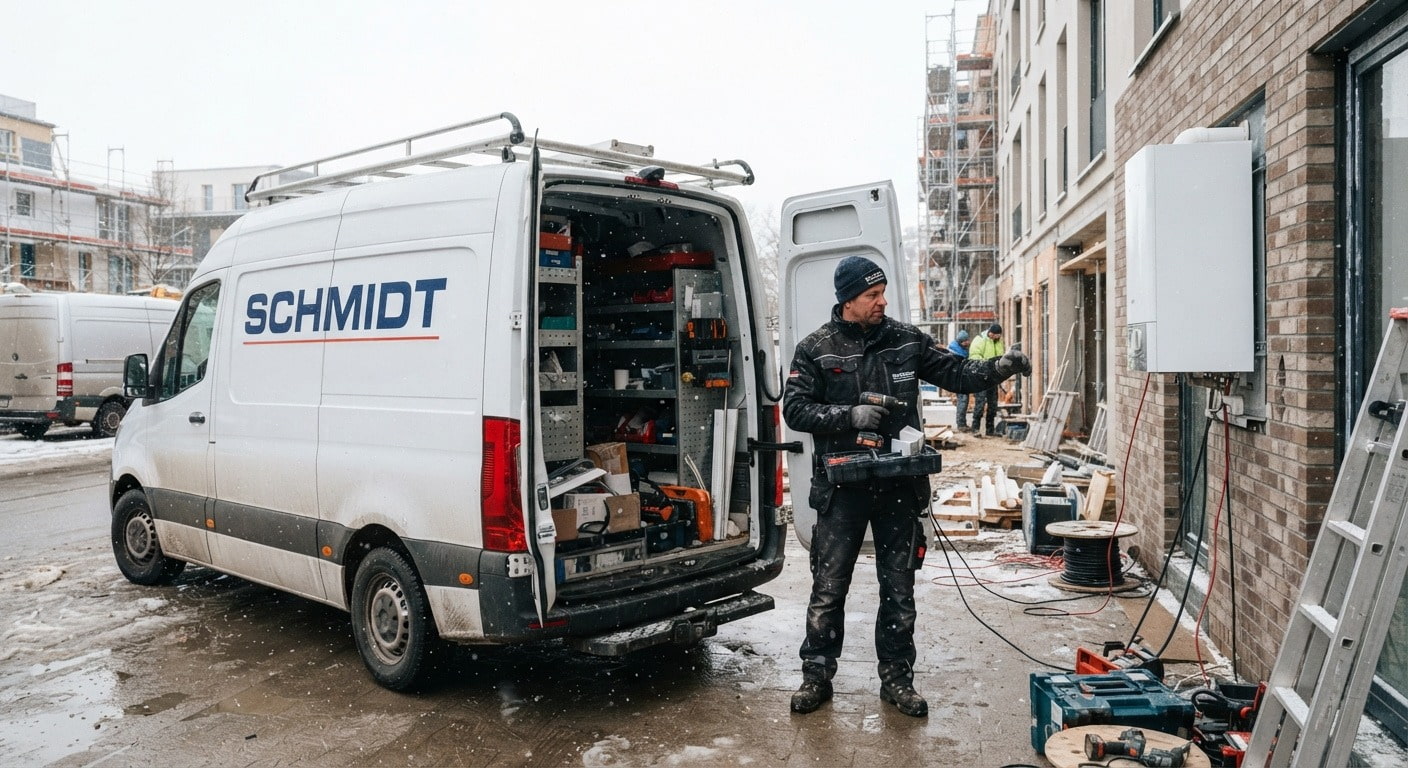
Statistically, winters in Germany are becoming increasingly mild. According to measurements by the German Weather Service (DWD), the average winter temperature was unusually high for the 15th consecutive year. But what does this mean for fleet management?
For fleets, milder weather can create tangible savings opportunities, as traditional winter-related risks statistically occur less frequently:
1. Savings on operating supplies and winter equipment
- Significantly less antifreeze: As the number of frost days decreases, the amount of windscreen washer antifreeze required across the fleet also falls. Maintaining large stocks in autumn may therefore no longer be economical.
- Reduced need for consumables: Spending on de-icing sprays, lock de-icers or snow chains, except for journeys in Alpine regions, can be reduced to a minimum.
2. Lower heating and energy costs at operating sites
- Heating costs for vehicle facilities: If commercial vehicles, buses or temperature-sensitive goods need to be stored in frost-free conditions overnight, milder outdoor temperatures can measurably reduce the amount of energy required to heat workshops and depots.
- More efficient pre-conditioning of electric vehicles: Pre-conditioning electric vehicles at the charging point in winter requires significantly less electricity from the grid at moderate temperatures of around 5°C than during prolonged periods of severe frost.
3. Reduced expenditure on winter maintenance
- Less grit and reduced personnel requirements: Companies are legally required to keep operating sites and access routes clear of snow and ice. With prolonged snow cover becoming less common in lowland areas, costs for salt and grit as well as standby fees for winter maintenance providers can be reduced.
4. Savings through all-season tyres (seasonal flexibility)
- Eliminating tyre change costs for urban fleets: For fleets operating exclusively on short-distance and urban routes, such as city delivery services, changing tyres twice a year may no longer always be worthwhile. Modern all-season tyres may be sufficient in many regions given the measured average temperatures, potentially reducing workshop costs and vehicle downtime.
- Longer service life for winter tyres: Where winter tyres are still required, shorter periods of cold weather can reduce wear, provided fleets respond flexibly and do not continue using softer winter compounds well into a warm spring.
5. Less weather-related downtime
- Fewer disruptions to operations: Frozen diesel lines, vehicles stranded due to severe winter traffic conditions or starter batteries discharged overnight occur less frequently. This can help fleets remain operational more reliably in winter and reduce costly downtime.
Where is there untapped savings potential in your fleet?
It is not only during winter operations that taking a closer look at costs can pay off. Holman helps you identify opportunities for optimisation across your entire fleet and use them sustainably.
Find out more about our fleet management solutions.
Sources:
Deutscher Wetterdienst. (2026, 28. Februar). Deutschlandwetter im Winter 2025/26. Deutscher Wetterdienst.
https://www.dwd.de/DE/presse/pressemitteilungen/DE/2026/20260228_deutschlandwetter_winter%2025-26_news.html
Volkswagen Financial Services. (o. D.). Flotte winterfest machen. Volkswagen Financial Services.
http://www.vwfs.de/geschaeftskunden/magazin-flotte/fuhrpark/flotte-winterfest-machen-sommer.html
TransPair. (o. D.). Wintercheck Fuhrpark. TransPair.
https://www.transpair.net/post/wintercheck-fuhrpark
Related Resources
Explore more related industry news, insights, and developments.
