-
What We DoWith our integrated fleet services, you get the entire fleet management and leasing market from a single source and can purchase, finance, manage and sell your fleet cost-effectively. And you only ever pay for what you actually use.Overview

-
ResourcesWe have a lot to share. Browse our resources library for current insights, data, strategies, and success stories from our own experts in their respective fields.Overview
-
About UsWhen Holman was founded in 1924, we set something positive in motion. Our consistent focus on people and our commitment to integrity make us who we are today.Overview
 Join Our TeamWe’re not just in the automotive business, we’re in the people business. Join us for the ride.Browse Careers

Why Supply Chain Management Is Essential for Fleets Today
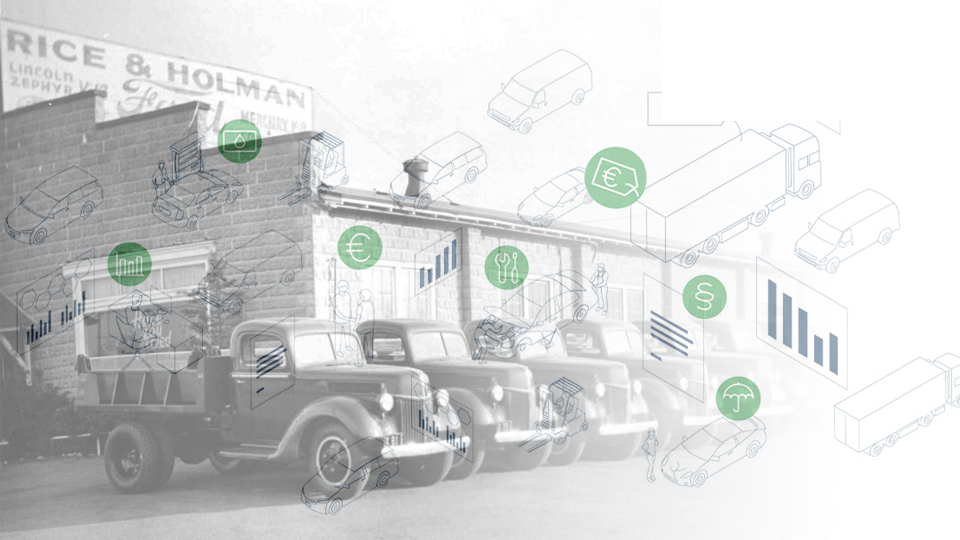
Fleet management began with horse-drawn carriage operators. The Butterfield Overland Mail Company, which transported mail and passengers with stagecoaches starting in 1857, had to regularly service its many coaches and ensure proper care for its animals. Much has changed since then – but the principle remains the same. The right vehicles must be acquired for the job, adapted when necessary and kept running. The new horsepower, however, no longer consumes oats but electricity, gasoline or hydrogen.
Yet some things have changed dramatically: supply chains, digitalization, bureaucracy and inflexible leasing structures have made it increasingly complex to manage a fleet intelligently and efficiently. In the aviation industry – where a grounded aircraft can be costly or even fatal – the need for effective fleet management was recognized early on, as far back as the 1950s. Airlines faced complex decisions about aircraft types, costs, efficiency and passenger capacity as their fleets grew. Since then, fleet management has become the core of the aviation business.
In the automotive industry, independent fleet service providers and leasing companies only emerged in Germany during the 1970s. They not only handled financing but also began taking over administrative tasks such as managing maintenance and repair processes.
Since then, the demands on companies in the area of vehicle procurement have changed dramatically once again. Delivery delays, rising costs and inefficient workflows are putting increasing pressure on fleet managers. What was once considered an operational side issue has become a strategic bottleneck – the vehicle supply chain now plays a decisive role in competitiveness, responsiveness and profitability.
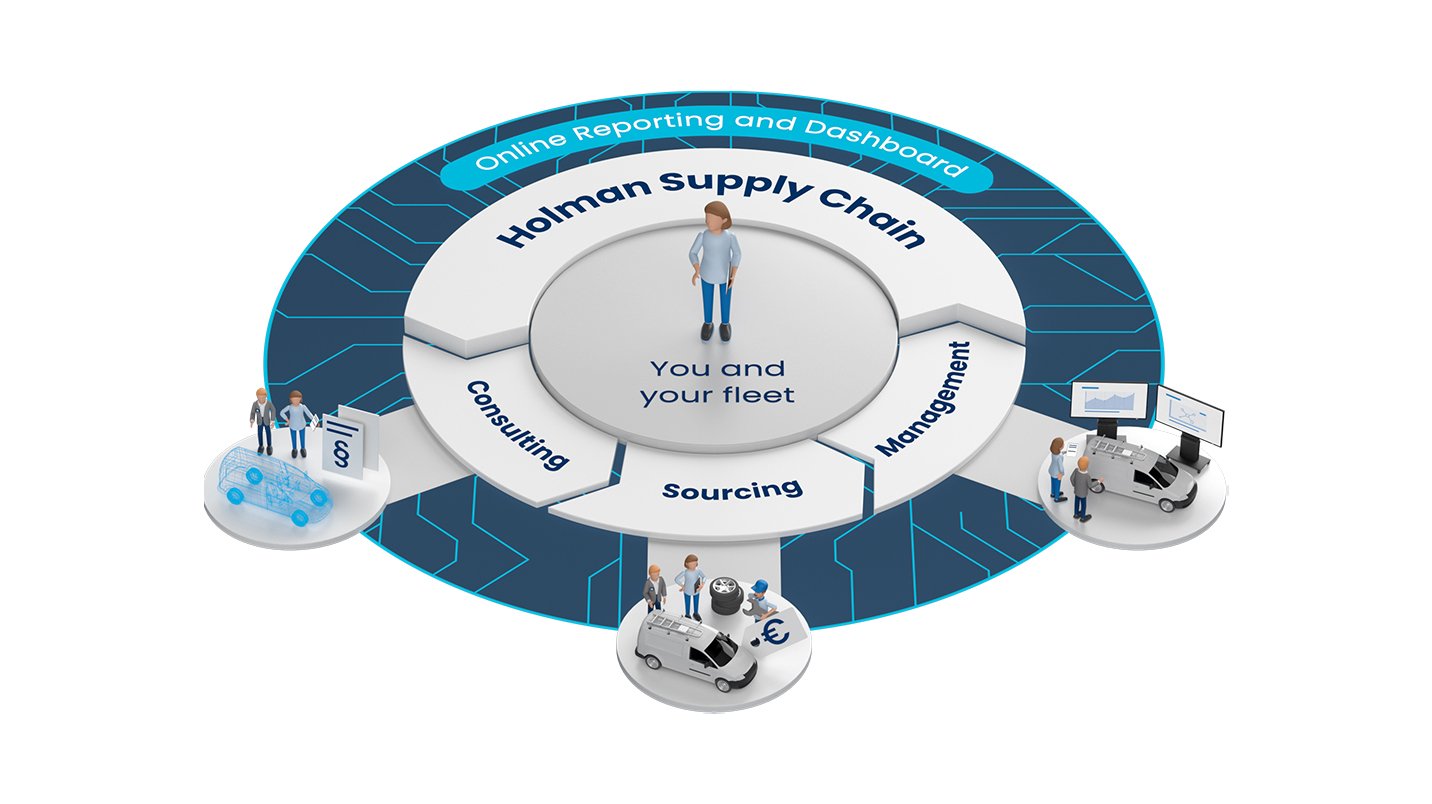
That’s why – alongside AI and digitalization – Supply Chain Management is considered the next evolutionary stage of fleet management. To achieve an efficient and transparent vehicle supply chain, companies need three essential modules: consulting, procurement and management. These modules are interconnected through digital processes and are optimally executed by strong partners with clear structures.
While each individual task within the supply chain already existed, the innovation lies in the holistic process, which saves significant time, stress and costs. This is exactly the approach taken by Holman Supply Chain: we combine every step – from planning and procurement to vehicle delivery – within one seamlessly managed system.
As one of our customers, the fleet rental manager at EGB Group, puts it: “Holman took over the coordination of all partners, communicated transparently, and provided reliable status updates on a regular basis. For us, that meant maximum planning reliability with minimal internal effort. The vehicles were delivered on time and in the expected quality – without delays or operational disruptions. The project was a textbook example of successful, fully managed vehicle procurement.”
This is what the future feels like.
Contact us to learn more.
Related Resources
Explore more related industry news, insights, and developments.