What Is Total Cost of Risk? Seeing the Full Cost of Fleet Incidents
When fleets measure risk, they usually start with insurance premiums and . Those expenses matter, and they’re the easiest to see. But they’re only part of the total cost of risk for a business.
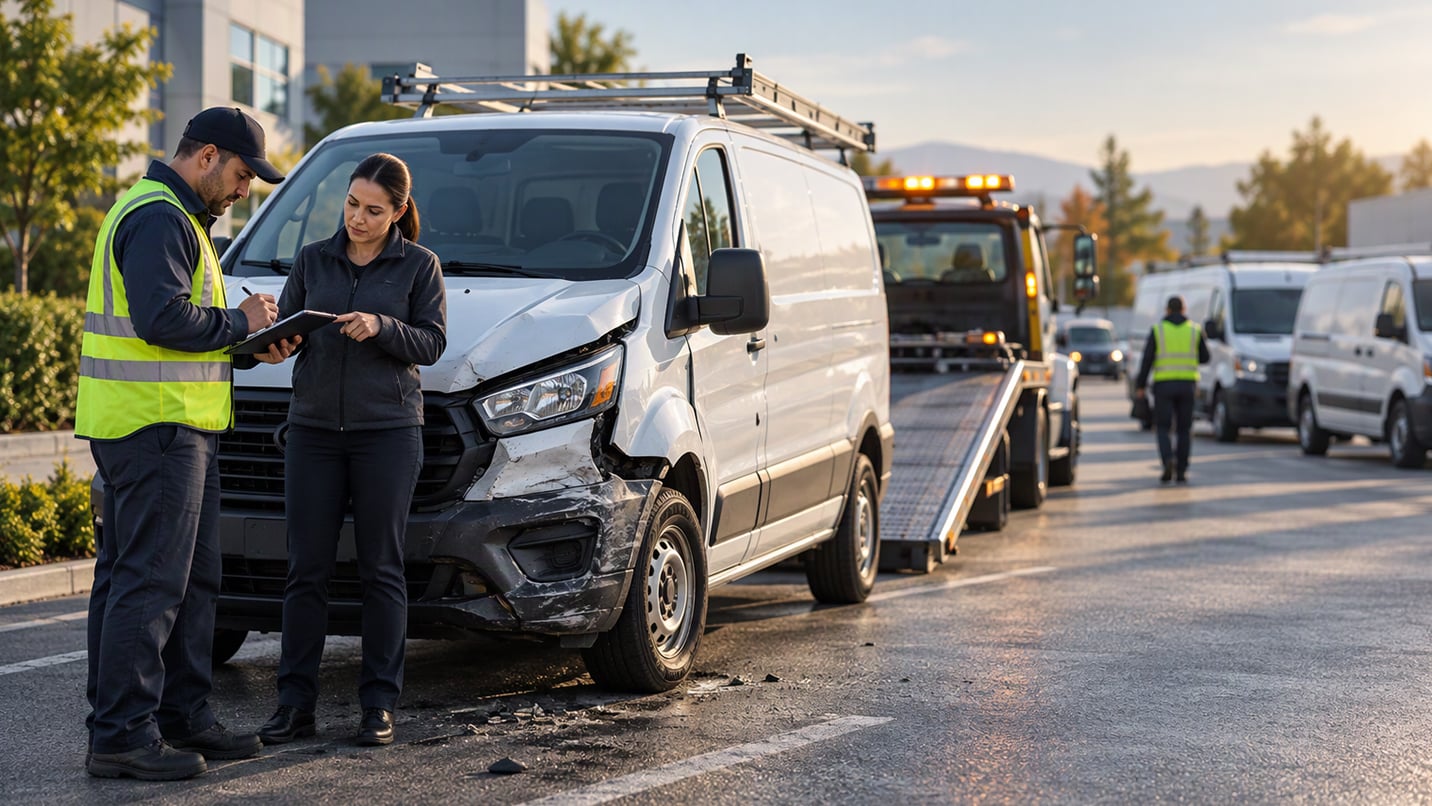
Accidents, and unsafe driving behaviors that contribute to them, can create costs well beyond the resulting claim. They cause vehicle downtime, delay customer work, and add hours of documentation and coordination for managers. Few of those costs show up on an insurance statement, yet each one affects overall fleet performance.
Total Cost of Risk (TCOR) provides a more complete view. It brings together all the variables that contribute to risk-related costs, from premiums and claims to vehicle downtime, potential rental costs, lost productivity, and the time teams spend managing incidents. Here’s a closer look at what TCOR includes, how to build a complete view of risk, and how organizations can use it to evaluate risk and make better decisions.
What Total Cost of Risk Includes
TCOR combines two types of costs: direct and indirect. Direct costs are readily identifiable expenses that usually appear on a policy, invoice, or insurance claim. Indirect costs show up across the operation, often without a clear connection back to the incident that caused them.
Direct costs
- Insurance premiums: The ongoing cost of coverage, shaped by a fleet’s claims history and risk profile.
- Claims: Payments and expenses tied to accidents and other incidents.
- Vehicle damage: Repairs, parts, and replacement costs after an incident.
- Legal costs: Expenses that can follow when liability is disputed.
Indirect costs
- Downtime: Vehicles out of service while they’re repaired or replaced, which can leave the fleet short on capacity.
- Lost productivity: Drivers who can’t complete their work and managers pulled away from other priorities.
- Administrative burden: Time spent on claim intake, incident reports, claims coordination, repair scheduling, and follow-up.
- Customer service disruption: Delayed work, missed appointments, and rescheduled commitments that can affect customer relationships.
When only the direct costs are counted, risk looks like an insurance expense. Counting both shows its full impact on fleet performance.
Building a Complete View of Risk
Many risk costs trace back to high-risk driving behavior. A single instance of speeding, harsh braking, or distracted driving can seem minor in the moment. But when they go unaddressed, they can lead to recurring incidents and claims, and the costs compound over time.
Seeing that connection clearly depends on bringing together information that often lives in separate systems:
- Telematics data from in-vehicle devices and cameras
- Driver data, such as motor vehicle records, violations, accident history, and training completion, adds context to that behavior.
- Claims and incident data show what risk is costing the organization and where those costs come from.
On their own, each source tells part of the story. Connected, they show which drivers, locations, or vehicle types contribute most to risk and what that risk is costing the business.
Using TCOR to Make Better Decisions
With a comprehensive view of risk, organizations can:
- Focus safety investments where risk costs concentrate, instead of applying the same approach across the entire fleet.
- Strengthen the business case for safety programs and fleet investments by showing what incidents cost beyond premiums.
- Improve insurance conversations by presenting a credible picture of how the fleet is managing and reducing risk.
- Measure what’s working by tracking how risk costs change over time.
A broader view also builds buy-in from the top. When leadership reviews risk alongside other performance metrics, accountability extends beyond the safety team. Risk becomes a shared responsibility, with decisions about drivers, vehicles, and policies weighed against their full cost to the business.
Risk Is a Business Performance Issue
Insurance premiums will always be part of managing fleet risk, but they aren’t the full measure of it.
TCOR gives fleet leaders a way to see what risk actually costs, where those costs come from, and where action will make the biggest difference. With that view, risk becomes part of how fleet performance is managed, not just a line item reviewed at renewal.
Organizations that take this approach are better positioned to reduce avoidable expenses, protect uptime and productivity, and make more informed choices about safety, driver behavior, and fleet strategy.
Next Post
The Hidden Cost of DowntimeRelated Resources
Explore more related industry news, insights, and developments.