Reading Time: < 1 minute

From Spec to Job-Ready—With Fewer Delays


How integrated ordering, upfitting, and delivery reduce friction and bring job‑ready vehicles into service faster.

FULL SCREEN
DOWNLOAD

Fleet performance is shaped long before a vehicle enters service. From specification through delivery, early decisions influence cost, uptime, and long-term value.

For vocational fleets, that process is defined by one critical phase: upfitting.

The Reality of Vocational Fleet Management

Vocational fleets operate under a different set of demands.
They require:

  • Specialized configurations tied to specific job functions
  • Standardized builds that support scalability as fleets grow
  • Equipment that directly impacts productivity in the field
  • Coordination across OEMs, upfitters, transportation and delivery providers, licensing agencies and service networks
  • Precise timing to align delivery with operational demand

In this environment, vehicles are revenue-generating tools. And if they’re not fit-to-purpose, productivity and efficiency suffer.

Where Most Model Breaks Down

Many fleets manage their operational demands—spanning acquisition, upfitting, delivery, and service—through a fragmented network of providers:

  • One partner for acquisition and ordering
  • Another for upfitting
  • Separate providers for transport, delivery, and licensing
  • Additional vendors for maintenance and resale

Each stage operates independently. As work moves from one provider to the next, the risk of friction increases—missed timelines, communication gaps, reduced visibility into order progress, and logistical hurdles .  Some providers also operate  primarily operate as order takers, not planning partners, making the process inherently reactive. The result is a widening gap between when the vehicle is needed and when it’s ready to generate revenue.

From Managing Vendors to Managing Outcomes

The goal isn’t to coordinate vendors more efficiently. It’s to eliminate the need to manage so many of them in the first place. That’s why fleets need an integrated model that focuses on what actually matters: fully operational, job ready vehicles—delivered on time.

One Partner for Ordering, Upfitting, and Delivery

Holman integrates ordering, upfitting, and delivery into a single, coordinated process so vehicles move from order to job-ready with greater speed and consistency:

  • Acquisition & Ordering – Vehicles are sourced and ordered to match specifications, timelines, and operational requirements, reducing rework and misalignment
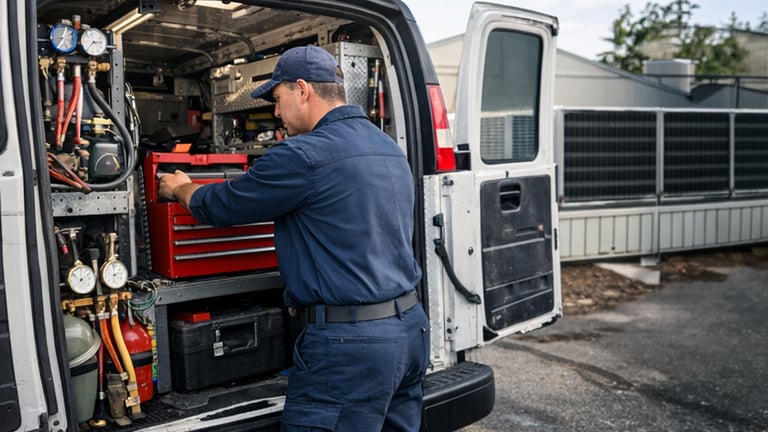
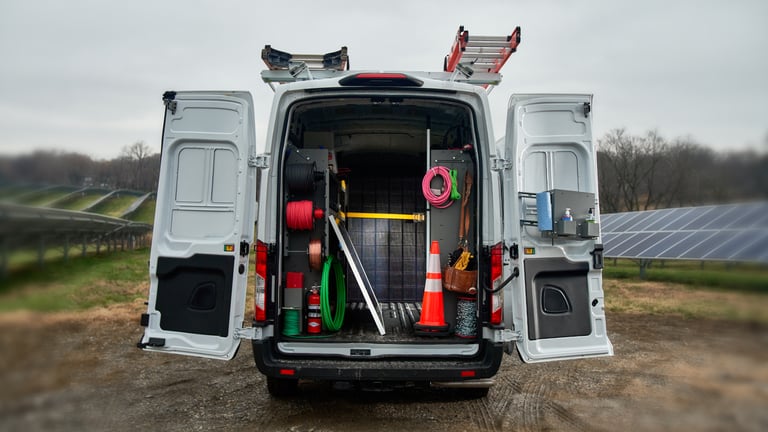
  • Upfitting – Engineering, configuration, and builds are aligned to the work vehicles are expected to perform, supporting productivity from day one.
  • Delivery – Logistics, licensing, and deployment are coordinated so vehicles arrive ready for service

Beyond deployment, Holman supports fleet across the full vehicle lifecycle—helping maintain uptime and long-term performance.

The Holman Advantage: Where Upfitting Comes Together

Upfitting succeeds or fails long before a vehicle reaches the shop.

It depends on how well job requirements are understood, how early stakeholders are aligned, how consistently builds are standardized, and how clearly progress is managed from specification through delivery.

In fragmented models, those responsibilities are split across disconnected providers—introducing delays, rework, and misalignment.
Holman’s integrated lifecycle model brings these elements together:

  • Job requirements inform specifications from the start
  • Fleet, operations, and engineering stay aligned through the build process
  • Configurations are standardized where possible to support efficiency and redeployment
  • Production and logistics are managed against realistic timelines
  • Status, progress, and delivery remain visible end to end

This integration is critical for vocational fleets, where assets operate across remote job sites, uptime is critical, and logistics are complex. Rather than waiting on disconnected vendors to fulfill orders, fleets gain access to consultative parter with the resources to plan ahead, control costs, and get vehicles into service faster.

The Bottom Line

Fleet performance improves when the lifecycle is managed as a connected system, not a series of handoffs.

By eliminating multiple vendors, Holman centralizes planning, communication, and accountability—reducing delays and bringing vehicles into service sooner. The result is a fleet that’s road ready when it’s needed, easier to manage over time, and better aligned to the realities of your operations.