-
What We DoFrom fleet management and productivity solutions to upfitting, fabrication, and insurance, Holman has the integrated automotive services expertise to keep your business moving.OVERVIEW

-
SolutionsWith a strategic solution that works for you and your business, you can unlock revenue-generating opportunities and begin managing your fleet as an investment.Overview
Solutions by IndustryHolman's fleet expertise covers nearly every vertical industry. No matter your field, we can meet your fleet challenges head on.Solutions by Industry
 Personalized SolutionsEvery company has its own unique set of challenges and considerations when it comes to fleet management. Holman offers customizable solutions to fit your needs.Build Your Own
-
ResourcesWe have a lot to share. Browse our resources library for current insights, data, strategies, and success stories from our own experts in their respective fields.Overview
-
About UsWhen Holman was founded in 1924, we set something positive in motion. Our consistent focus on people and our commitment to integrity make us who we are today.Overview
 Join Our TeamWe’re not just in the automotive business, we’re in the people business. Join us for the ride.Browse Careers

Barriers to EV Adoption
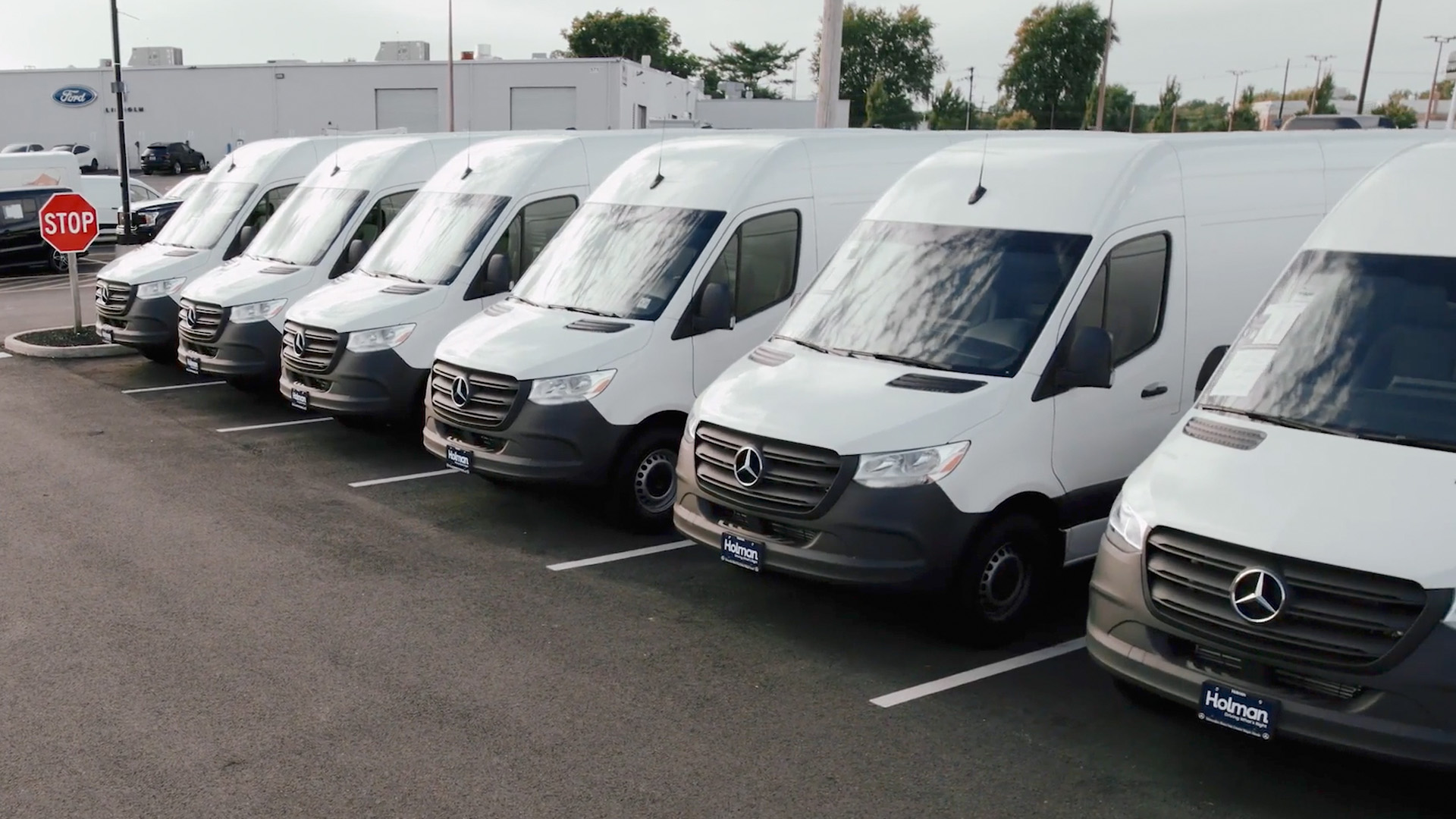
The eventual switch from predominantly internal combustion engine (ICE) vehicles to zero-emission vehicles (ZEV) to meet regulatory requirements is of particular concern to fleet managers and executives. Unlike consumers who can delay indefinitely the purchase of 1-2 electric vehicles (EVs) as replacements, commercial fleets will need to make decisions much sooner as they replace much larger numbers of ICE vehicles.
In the U.S., 17 states have already adopted all or part of California’s Advanced Clean Cars II regulations, requiring that 35% of sales be zero-emission vehicles by 2026, 68% by 2030, and 100% by 2035. Canada’s 2030 Emissions Reduction Plan annually sets increasing requirements towards achieving 100% ZEV sales by 2035, including interim targets of at least 20% by 2026 and at least 60% by 2030.
With the growth of EV sales experiencing a recent slowdown and regulatory requirements seemingly inflexible, the question asked is how on earth are commercial fleets going to meet the target in both the U.S. and Canada of 100% ZEV sales by 2035? Better yet, what barriers prevent the mass adoption of electric vehicles on a scale that would allow the U.S. and CDN ZEV sales targets to be met?
Charging Standard
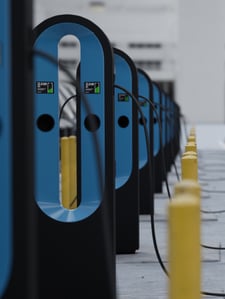 A universal standard for charging stations and a nationwide network of these charging stations is essential to widespread EV adoption, making the battery charging experience fast, dependable, and convenient.
Tesla recognized the need for a reliable charging network early on and launched its private DC-fast charge Supercharger network in 2012. Chargers are strategically placed at shopping destinations, restaurants, and other amenities, making charging time pass quickly. Tesla’s network has become known for its reliability and user experience. In 2022, the Tesla Charging Standard was rebranded as the North American Charging Standard (NACS).
Tesla’s charging network’s success has led to the adoption of the NACS by other major EV manufacturers. In May 2023, Ford became the first major automaker to adopt NACS as their charging standard. GM has followed suit with other EV manufacturers like Honda, BMW, and Toyota. Stellantis is the only significant player that has yet to adopt NACS but is committed to expanding EV charging infrastructure to support this now universal standard.
The Electricity Grid
A further barrier is whether the U.S. electrical grid can manage the widespread adoption of electric vehicles. Most industry experts agree that the nation’s electrical grid is up to supporting EVs and will add the necessary capacity over time. However, successful EV adoption will rely on investments in the grid itself and on how and when EV drivers charge their vehicles.
The complete shift to electric vehicles will only happen after some time, as used ICE vehicles will continue to be driven until at least 2045. The need for 30% more electrical capacity over the next 20 years is feasible given history and with much of the new capacity coming from modernized, far more dispersed, renewable sources. Peak demand will be managed by charging EVs when usage is low, similar to what is done with air conditioning. Electric vehicles will be able to benefit the grid when demand is high by flowing power back through vehicle-to-grid (V2G) technology.
EV industry skeptics predict that electric vehicles will lead to electrical grid failures and power outages. These misconceptions or misunderstandings will be addressed as consumers become better educated over time.
Road Repair Taxation
It is widely understood that an electric vehicle can be cheaper to operate concerning maintenance and electricity than an internal combustion engine vehicle. However, when the ICE vehicles on the road become outnumbered by EVs, the latter will become more costly to operate than now. The current road taxes baked into the price of gasoline will somehow have to be shifted to electric vehicles. EVs will cause damage to roads just like ICE vehicles (potentially more so due to battery weight), and it follows that electric vehicles will be taxed to pay for road repair and maintenance.
The typical price of a gallon of gasoline in the U.S. includes 18.4 cents in federal taxes and 32.3 cents in state taxes. That represents 50.7 cents in tax revenue not collected for every gallon of gasoline not being used by an ICE vehicle replaced by an electric vehicle. $68.5 billion dollars in annual federal and state tax revenue is at risk with the shift away from ICE vehicles to EVs. Discrepancies will worsen as fuel economy improves if tax rates are not indexed to inflation and the share of electric vehicles grows more rapidly.
A potential solution to fund highways in the future is to tax vehicle miles traveled i.e. a VMT tax. This alternative approach is based on the miles a vehicle travels instead of how much it spends on fuel. A VMT would bring in more revenue but raises privacy concerns. A tax levied directly on miles driven gets closer to capturing external factors and approximating the road maintenance cost of each vehicle.
Battery Disposal
Any mass adoption of electric vehicles could lead to a wave of spent, used lithium-ion batteries. It would be a waste-management nightmare as some chemicals and components used to make EV batteries, like cadmium, nickel, and arsenic, are listed as toxic and cannot be thrown into a landfill.
Alternatively, batteries could be stripped of valuable components and recycled. There may also be the option to repurpose it for other uses, such as in a new stationary storage unit. However, more of the groundwork to set up a large-scale EV battery recycling program has yet to be done.
In the U.S. and Canada, there has been little public policy discussion, and accordingly no regulatory frameworks currently exist. The U.S. Department of Energy has only recently awarded funds to projects that advance technologies and processes for EV battery recycling and reuse.
Steps need to be taken to be transparent about the range and content of EV batteries and to create better policies and protocols regarding how the batteries will be recycled at the end of their useful life in vehicles.
What Can Fleets Do?
Fleet managers and executives must educate themselves and stay current on all aspects of the eventual transition from ICE to ZEV vehicles. The EV shift may feel like a trickle, but it will eventually become a flood. The following represents particular areas to focus on from a fleet perspective.
Validate corporate sustainability goals and put in place the reporting necessary to track fuel usage, emissions, and progress toward meeting these goals.
Use a phased approach to EV adoption to assist in making informed decisions regarding the feasibility of electric vehicles as technology progresses over time and new EV options become available.
Develop a roadmap for the switch from ICE vehicles to EVs, accounting for the eventual requirement for 100% ZEV sales by 2034 and the interim targets along the way.
Put together regular forecasts of the capital, operating, fuel, and emissions impact of any electric vehicle replacement and implementation strategies.
Commercial fleets will be forced to adapt and make decisions sooner than individual consumers regarding the oncoming EV revolution. Businesses must balance their vehicle requirements while navigating the constraints of the regulatory ZEV sales targets. The best strategy is to be prepared and ready for when the time comes.
Related Resources
Explore more related industry news, insights, and developments.