-
What We DoFrom fleet management and productivity solutions to upfitting, fabrication, and insurance, Holman has the integrated automotive services expertise to keep your business moving.Overview

-
ResourcesWe have a lot to share. Browse our resources library for current insights, data, strategies, and success stories from our own experts in their respective fields.Overview
-
About UsWhen Holman was founded in 1924, we set something positive in motion. Our consistent focus on people and our commitment to integrity make us who we are today.Overview
 Join Our TeamWe’re not just in the automotive business, we’re in the people business. Join us for the ride.Browse Careers

Essential Tips for Safe Driving in Hot Weather

As we experience another period of extremely hot weather in the UK, it’s important to understand how higher temperatures can affect both your driving and your vehicle. While sunny conditions might feel more enjoyable than winter driving, heat brings its own set of risks, from reduced concentration to increased vehicle strain.
With the right preparation and a few simple habits, you can stay safe, comfortable and in control.
Here are our essential tips to help you navigate driving in hot weather with confidence.
Make the Most of Your Air Conditioning
When you first get into your vehicle, open the windows briefly to allow trapped hot air to escape. Once the interior temperature has dropped slightly, close the windows and switch on the air conditioning. This reduces strain on the system and helps cool the cabin more efficiently.
Using the air recirculation setting can also improve performance by cooling already-conditioned air rather than drawing in warm air from outside.
For electric vehicles, cabin pre-conditioning allows you to cool the interior before you set off. If you can do this while plugged in too, it won’t use any of your battery.
Manage Glare and Strong Sunlight
Keep a pair of sunglasses in your vehicle, ideally polarised or anti-reflective, to reduce glare. Making use of your visor can help too!
Before setting off, check your dashboard for light-coloured items such as paperwork or packaging. These can reflect sunlight onto your windscreen, creating unnecessary distractions for you and other road users.
Check Your Tyres Before You Travel
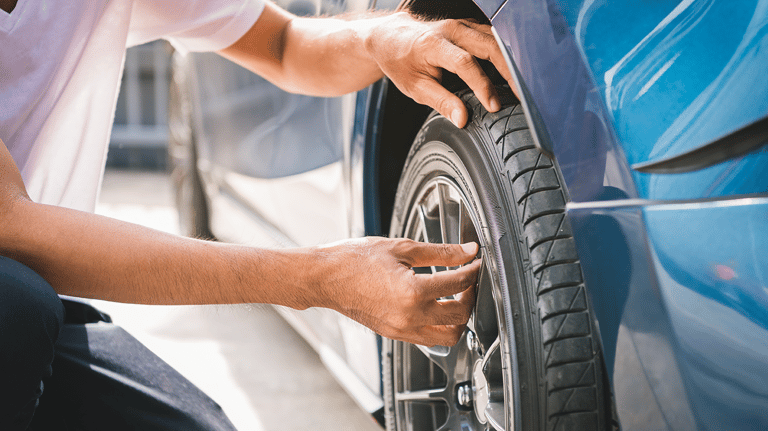
Tyres are particularly sensitive to changes in temperature. As the air inside them warms up, it expands, potentially increasing tyre pressure and the risk of damage.
On hot road surfaces, this can contribute to uneven wear or, in more severe cases, a blowout. To reduce risk:
- Check tyre pressure regularly and ensure it meets manufacturer recommendations
- Inspect tyres for signs of wear, cracks or bulges
- Respond promptly to tyre pressure warning lights
While tyres won’t melt in the heat, higher temperatures can make road surfaces softer and less stable, affecting grip and braking.
Keep Your Engine Cool
Hot weather can place additional strain on your engine, making it more susceptible to overheating.
Keep an eye on your dashboard for temperature warnings. If you see a red thermometer symbol, pull over safely and allow your engine to cool before continuing your journey. Driving an overheated vehicle can cause serious, lasting damage.
Before setting off, check that your coolant is at the correct level. Carrying extra coolant can also provide reassurance on longer journeys.
Support Your Own Safety and Comfort
Hot weather affects people as much as vehicles. Higher temperatures can lead to fatigue, dehydration and reduced concentration, factors that increase the risk of incidents on the road.
To stay alert and comfortable:
- Keep water in the vehicle and stay hydrated
- Wear light, breathable clothing
- Take regular breaks on longer journeys
If you’re travelling with passengers, their comfort matters too. Make sure they have access to water and ventilation, and never leave children, animals or vulnerable passengers in a parked vehicle, even for a short time. Temperatures inside a car can rise extremely quickly.
Plan Ahead for Breakdowns
If you do find yourself in the unfortunate position of being stuck at the side of the road, you’ll thank yourself for preparing a basic emergency kit, including:
- Drinking water
- Suncream and sunglasses
- A hat
- Snacks
- A phone charger
If you do break down, try to stay in a safe, shaded area while waiting for assistance.
Be Aware of Other Road Users
Warmer weather brings more cyclists, motorcyclists, pedestrians and horse riders onto the roads. Giving them extra space and being patient is key to keeping everyone safe.
Also be mindful that hot conditions can affect road surfaces. If you encounter softened or uneven tarmac, reduce your speed, avoid harsh braking and leave additional distance between you and the vehicle ahead.
What About Electric Vehicles?
Electric vehicles remain safe and reliable in hot weather. However, you may notice slightly slower charging speeds, as the battery works to regulate its temperature.
Where possible, park or charge in shaded areas. Pre-conditioning can also help maintain a comfortable cabin temperature without additional strain once you begin your journey.
You may also be wondering what impact air conditioning has on range. While using air conditioning will have some effect, it’s typically modest, especially when compared to factors like speed, driving style or terrain. In many cases, the marginal reduction in range is outweighed by the benefits of staying cool, alert and comfortable behind the wheel.
Conclusion
A little preparation goes a long way in hot weather. By looking after your vehicle, staying alert to changing conditions and considering the safety of others on the road, you’ll be well prepared for whatever the summer brings.
Related Resources
Explore more related industry news, insights, and developments.