-
What We DoFrom fleet management and productivity solutions to upfitting, fabrication, and insurance, Holman has the integrated automotive services expertise to keep your business moving.Overview

-
ResourcesWe have a lot to share. Browse our resources library for current insights, data, strategies, and success stories from our own experts in their respective fields.Overview
-
About UsWhen Holman was founded in 1924, we set something positive in motion. Our consistent focus on people and our commitment to integrity make us who we are today.Overview
 Join Our TeamWe’re not just in the automotive business, we’re in the people business. Join us for the ride.Browse Careers

Guide to Electric Vehicle Charging
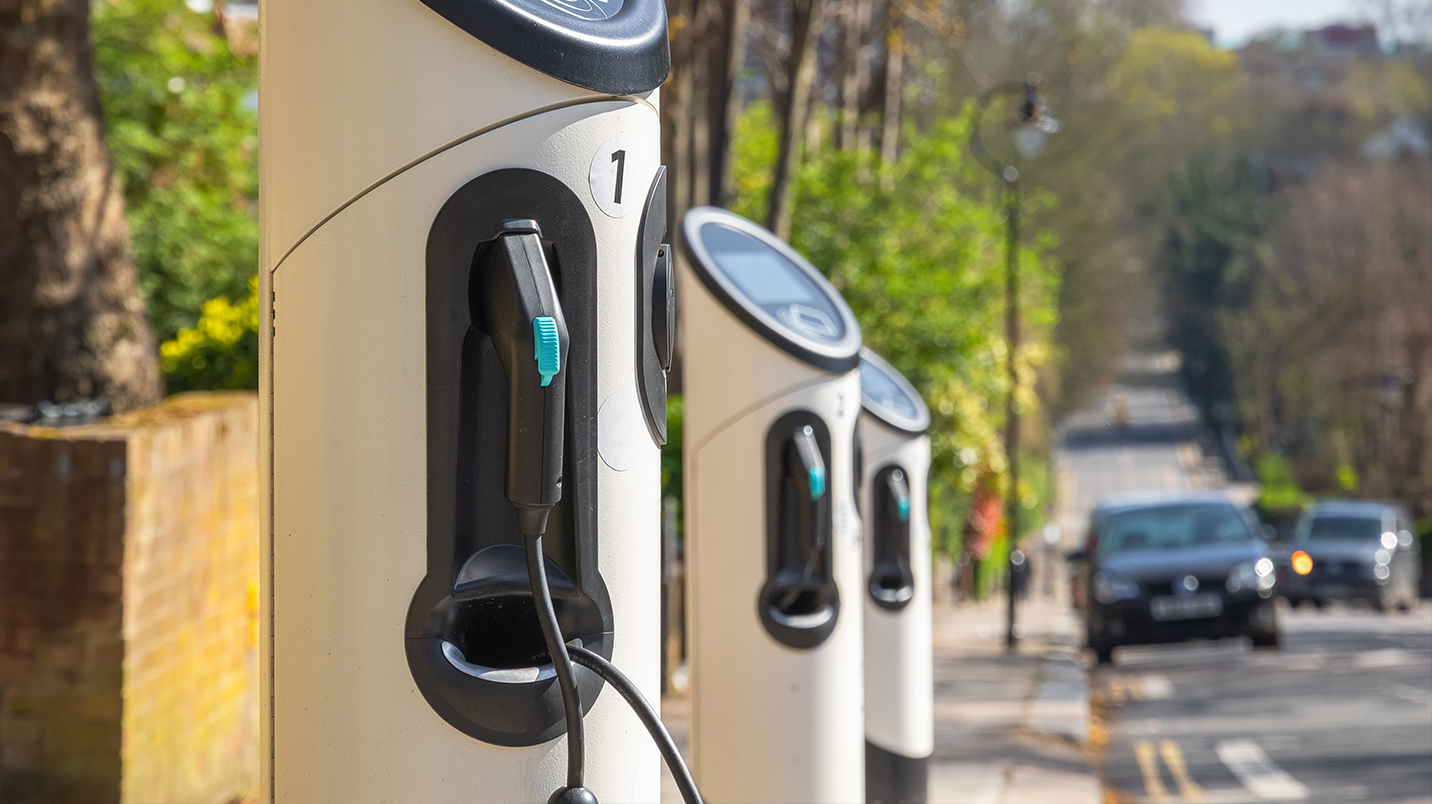
With the government’s renewed target of phasing out petrol and diesel cars (by 2030) and vans (TBC), more and more drivers are making the switch to electric. But for many, questions about charging remain a barrier.
The reality is it’s not all that different, and one of the great things about electric is that you can charge pretty much anywhere – at home, at the office, at a restaurant, whilst doing your shopping, when parked on the street, or even at a petrol station!
But as many people have only ever driven petrol or diesel vehicles, you probably have a few questions about how to charge them. So, here’s a helpful guide to equip you with all the knowledge you need before you plug in.
Understanding Your EV
The make and model of your EV will determine its range, charging ports, and charging times, so you’ll need to get familiar with your specific vehicle. It’s also important to know if your vehicle supports single or three-phase charging to optimise charging at home and when using public charging networks.
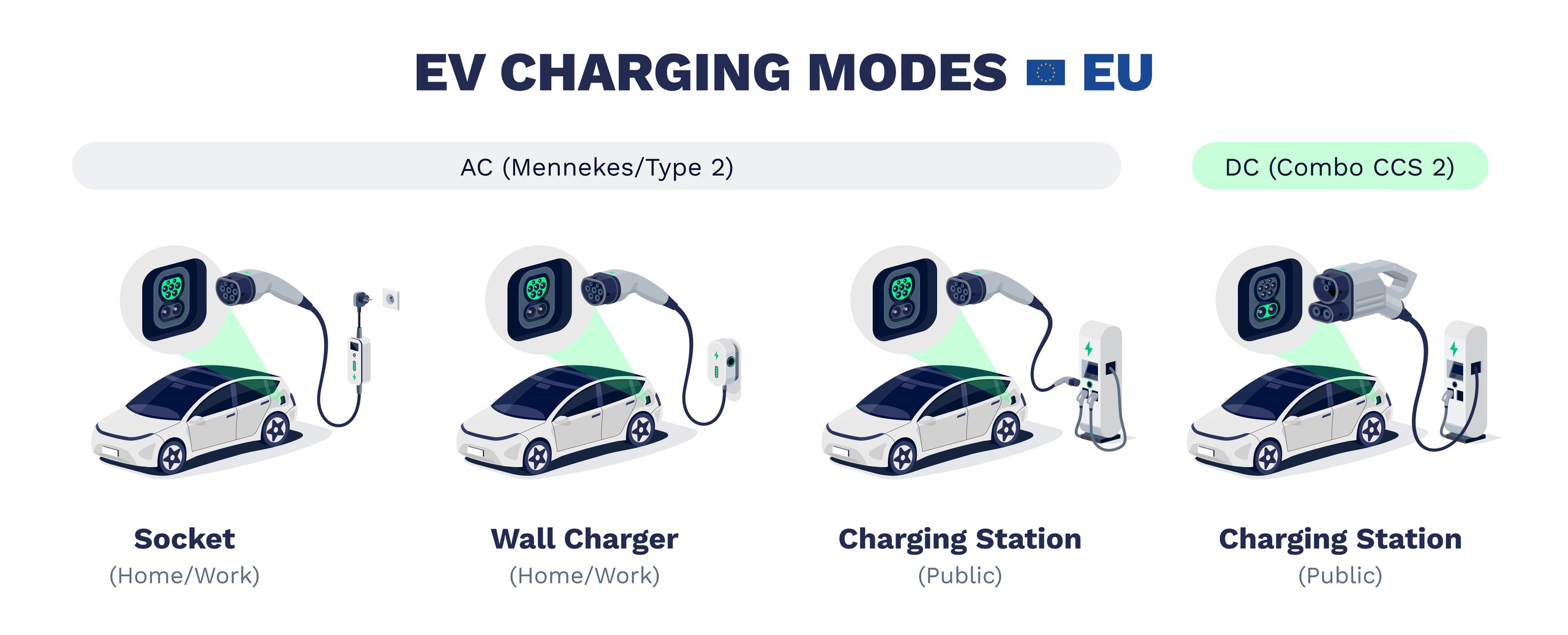
Most EVs in the UK use a Type 2 connector for AC charging – this is the type of charger you’ll use for home charging. And almost all also come with a CCS charge port for super-fast DC charging.
Plug-in hybrids (PHEVs) only support Type 2 AC charging as they typically have smaller battery packs and are designed for slower, more consistent charging at home or public charging stations.
Cables & Connectors
EVs typically come with two cables for AC charging:
- A standard household 3-pin plug – For emergencies but not recommended for regular charging due to safety concerns and very slow charging speeds (some older homes have electrics that aren’t designed for the sustained high current required for EV charging).
- A Type 2 connector: This is the standard connector for most EVs in the UK.
The connector end on your car will most likely be Type 2 in the UK (Type 1 was used in earlier EVs, but it’s much less common now).
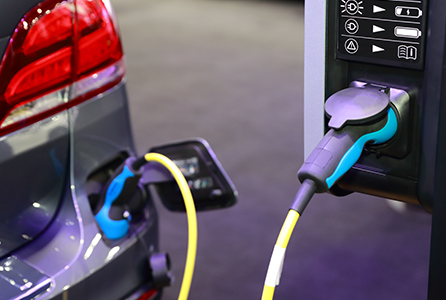
Your charging cable is needed for charging at untethered home chargers, workplace chargers, and most public charging points. Rapid DC chargers and some public AC chargers have tethered cables, similar to a fuel pump so you won’t need your own.
Types of Charge Points
Charging points are classified based on their power output and charging speed. Here’s a breakdown of what you can expect and where:
- Ultra Rapid – The fastest option with an output of100 kW or more using a DC charger with CCS connector. This type of charger is found at motorway service stations and major transport hubs, and takes as little as 15-20 minutes to reach 80% charge.
- Rapid – Typically 50 kW DC or 43 kW AC, often found at motorway services and charging hubs. It takes 30-60 minutes to reach 80% charge.
- Fast – Provides 7 kW to 22 kW power and is often found on home wall boxes, workplaces, and shopping centres. It takes several hours for a full charge, so is best suited for destination charging rather than a quick top-up.
- Slow – With a power output of 3-7 kW, these are best suited for overnight home charging, taking around 6-12 hours for a full charge.
Actual charge times will depend on other factors including your EV’s battery capacity, the charger’s power output, and the battery’s state of charge.
How long does it take to charge an electric car?
Charging times depend on battery size, charger type, and starting battery level. Essentially, a larger battery takes longer to charge, and a faster charger gets you back on the road quicker. Don’t worry about reaching 100% every time – a 30-minute rapid charge can give you a decent enough charge to continue your journey, so you can save the full power charge for when you’re plugged in overnight. Electric vehicles don’t charge at a constant rate, the speed increases as the battery fills up, then slows down as it approaches full capacity. That’s why charging times are often quoted from 20% to 80% because this is the fastest part of the charging process.
How much does it cost to charge an electric car?
Home charging is the cheapest option in almost all cases – unless you can get it for free at your workplace. You’ll need to get a wall-mounted charger installed which are around £1000 including installation, but manufacturers often have discounts and offers to help bring that price down.
Charging at home costs around 7p/kWh, while public chargers are over 10x more than this at around 79p/kWh. So it will heavily depend on where you’re plugging in, as well as the efficiency of your EV to determine the cost. However, since it’s very unlikely you’ll do all your charging on a rapid charger, you can expect to save compared to petrol or diesel when filling up.
Charging at home
Having a home charger installed means you’ll be able to start your day with a full charge without disrupting your routine – the most convenient and cheapest way to charge. There are lots of different energy tariffs so it’s worthwhile exploring your options like off-peak tariffs or subsidised workplace charging to save costs. If you don’t have access to off-street parking there are solutions like pavement gullies, lamppost charging, and current grants available for renters and flat owners to benefit from the cheaper prices.
Tips for Charging Tactically
- Charge to 80%: It’s generally more efficient and quicker to charge to 80%, then stop and charge again later if needed, rather than waiting for a full charge (due to the charge curve graph).
- Charge at night: Save money by charging at night when electricity rates are lower. Look for off-peak energy tariffs offering discounted EV rates.
- Workplace charging: Charge your EV at work if your employer offers free or subsidised charging.
- Invest in a home charger: Standard 3-pin plugs are extremely slow and can be unsafe for extended charging use.
- Explore off-street parking options: If you don’t have off-street parking, explore options like pavement gullies by Kerbo charge – check with your local council to see what’s approved.
- Community home charger network: Check out options like Co-charger to make use of a community home charger network and sharing home chargers.
- Charge card products: If you’re travelling long distances, consider a charge card product that allows you to charge across multiple networks – avoiding the need for multiple apps and complications.
We’re Here to Help
Switching to an EV comes with a few changes to your routine, but charging isn’t as complicated or different as you may think. With a growing network of nearly 65,000 charging points across the UK – a 46% year-on-year increase – and a variety of charging options available, is becoming more accessible for everyone. By following these tips for charging tactically, you’ll actually spend less time plugging in than you would filling up a petrol or diesel vehicle!
At Holman we have the experts to help you understand your EV so you can confidently make the transition to electric. Contact us for support in developing your long-term fleet sustainability plan to maximise your green investment ahead of the ICE ban!
Next Post
Summer Driving Essential ChecklistRelated Resources
Explore more related industry news, insights, and developments.