-
What We DoFrom fleet management and productivity solutions to upfitting, fabrication, and insurance, Holman has the integrated automotive services expertise to keep your business moving.Overview

-
ResourcesWe have a lot to share. Browse our resources library for current insights, data, strategies, and success stories from our own experts in their respective fields.Overview
-
About UsWhen Holman was founded in 1924, we set something positive in motion. Our consistent focus on people and our commitment to integrity make us who we are today.Overview
 Join Our TeamWe’re not just in the automotive business, we’re in the people business. Join us for the ride.Browse Careers

New EV Reimbursement Rates Explained
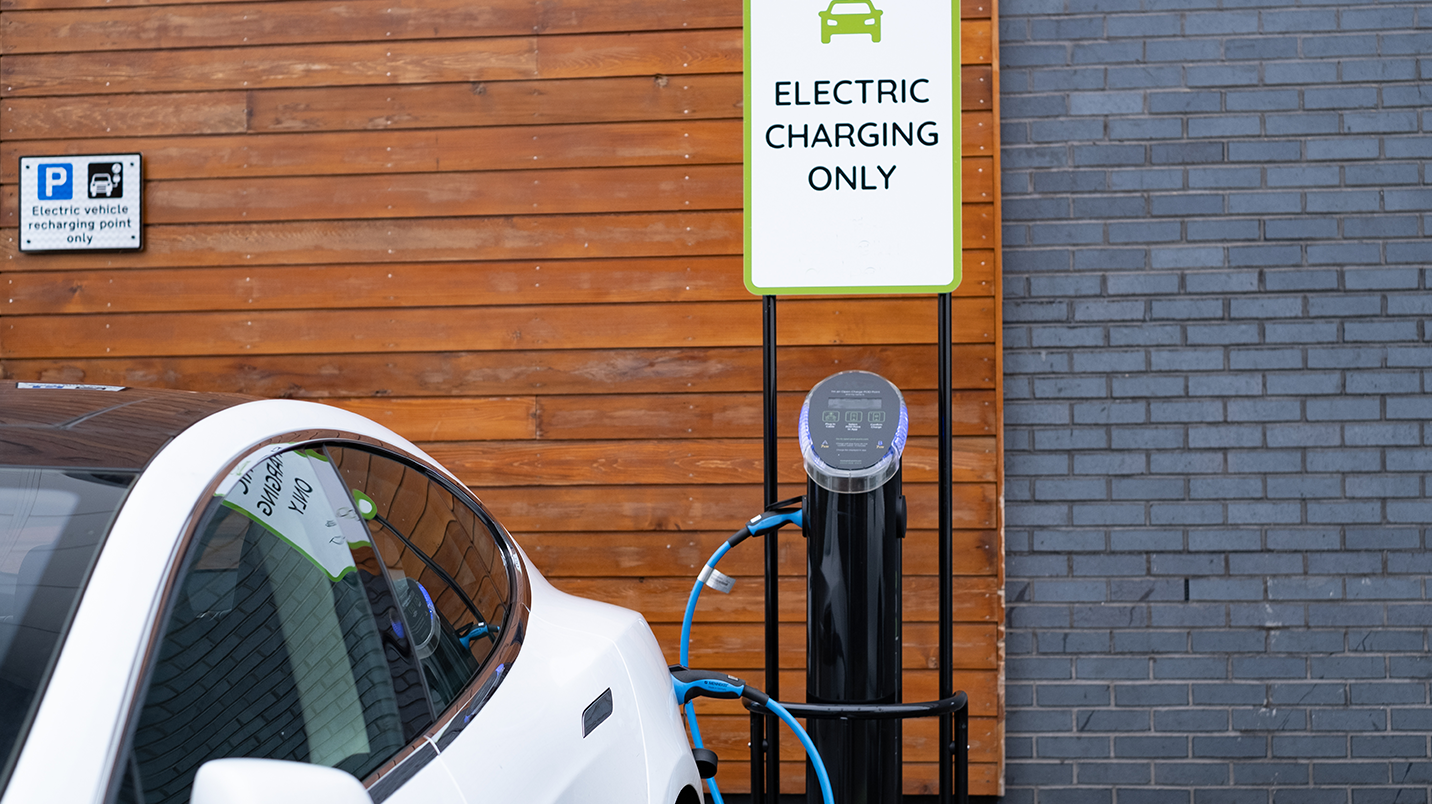
HMRC has announced a major update to electric vehicle (EV) mileage reimbursement rates. As of 1st September 2025, mileage rates will now separate out home and public charging for electric vehicles. It’s a move that reflects the real-world complexity of EV charging costs, and it’s going to require fleets to rethink how they manage expenses and support drivers.
Why This Matters
Until now, EV drivers were reimbursed using a single rate – 7p per mile – regardless of where they charged.
This approach didn’t reflect the significant cost differences between home and public charging.
With HMRC’s new rates now in effect – 8p per mile for home charging and 14p per mile for public charging – the system better accounts for these variations:
- Public charging: Costs vary widely depending on speed, location, and operator. According to Zap-Map’s Charging Price Index, rapid chargers can exceed 80p per kWh, while slower options may be significantly cheaper.
- Home charging: Often up to 10x cheaper than public charging. HMRC uses the Ofgem domestic electricity price cap (currently ~27p per kWh) as its benchmark. However, many EV drivers could benefit from smart tariffs offering rates as low as 7p per kWh, depending on time-of-use deals.
Despite these potential savings, a recent survey found that only 18% of EV drivers are on dedicated EV energy tariffs. Most rely on the standard domestic rate, making HMRC’s benchmark a fairer starting point, but not the full picture.
So what next? As Ross Palman explains, we may see one of two approaches emerge:
Split mileage entries: Expense systems could allow drivers to log home and public charging separately, with rates applied accordingly. While this offers precision, it adds complexity for both drivers and administrators – and verifying claims may prove challenging.
Blended rate: Alternatively, fleets might simplify the process by adjusting the overall mileage rate to reflect a typical mix of charging methods, while maintaining a single-entry format.
Ultimately, the approach taken will likely vary by fleet, depending on the complexity of their systems and how they currently manage employee customer reimbursements.
Efficiency Isn’t Equal
Whilst HMRC’s EV reimbursement model assumes an average EV efficiency of 3.59 miles per kWh, for larger, less efficient EVs like the Audi Q6 e-tron (3.0 mi/kWh) or Kia EV9 (3.3 mi/kWh) may benefit from these changes
But more efficient models, like the Mercedes-Benz CLA Electric (5.1 mi/kWh) or Tesla Model 3 (5.0 mi/kWh), can travel much further on the same charge and therefore potentially suffer.
This may result in reimbursement being either too generous or too lean, and should be monitored closely.
What Fleets Need to Do Now
With the new rates now in effect, here are the top three actions to help navigate these changes:
1. Update EV reimbursement policies to clearly reflect the split between public and home EV charging.
2. Review your expense systems to ensure they support more detailed reporting, especially for drivers who use both charging methods.
3. Decide on your EV reimbursement approach: stick with HMRC’s standard rates or opt for actual cost reimbursement using receipts and tariff details for greater accuracy and fairness.
This is also a great opportunity to educate drivers on EV energy tariffs, helping them make smarter, more cost-effective charging decisions.
Looking Ahead
HMRC’s update is a crucial step in recognising the true cost of EV charging. But it’s also a reminder that fleets must keep evolving, ensuring systems and policies are fit for purpose and ready to meet new requirements.
Our experts stay ahead of regulatory changes and work closely with our customers to get the most from their electrified fleets. Wherever you are on your sustainability journey, we’re here to support you.
Related Resources
Explore more related industry news, insights, and developments.